Allison and Stephen Ellsworth launch Jetty, an electrolyte drink line aimed at everyday consumers with lower sodium and no artificial ingredients.
A daily use case
Jetty’s pitch is that hydration drinks can serve daily routines, not just athletic performance. Poppi co-founders Allison and Stephen Ellsworth have launched the brand with electrolyte powders and ready-to-drink beverages, entering a crowded category with a formula designed around moderate sodium and added functional ingredients. That’s a positioning choice as much as a product one: Jetty is asking consumers to think about hydration as an everyday habit, rather than something reserved for workouts or recovery.
Allison Ellsworth, Jetty’s chief brand officer, said the idea came from her experience with chronic dehydration. She found existing electrolyte drinks geared toward high-performance athletes, with high sodium levels and artificial ingredients, and couldn’t find a brand that felt relevant to her. That personal account helps explain the product brief, though it doesn’t establish how widespread the same unmet need is. It does point to a familiar opening for new beverage brands: a product category can feel crowded while still leaving consumers dissatisfied with the way existing options are presented.
That positioning gives Jetty a clear opening as beverage companies broaden hydration products beyond sports. The brand says it is targeting everyday consumers and avoiding artificial ingredients, while adding magnesium, prebiotics and B vitamins. The distinction is not simply about lowering sodium; it’s also about making the product feel compatible with ordinary routines. A drink framed for daily use has to make sense on its own terms, without asking customers to identify as athletes or to adopt a specialized regimen.
This is more significant than it looks: changing the intended occasion can widen a product’s audience, but it also changes what consumers will expect. A performance drink can be judged against a workout. A daily hydration product has to earn a place in a much broader set of habits, where taste, convenience and perceived usefulness all matter. Jetty’s formula and branding are making that case; repeat purchases will show whether customers agree.
What’s in the lineup
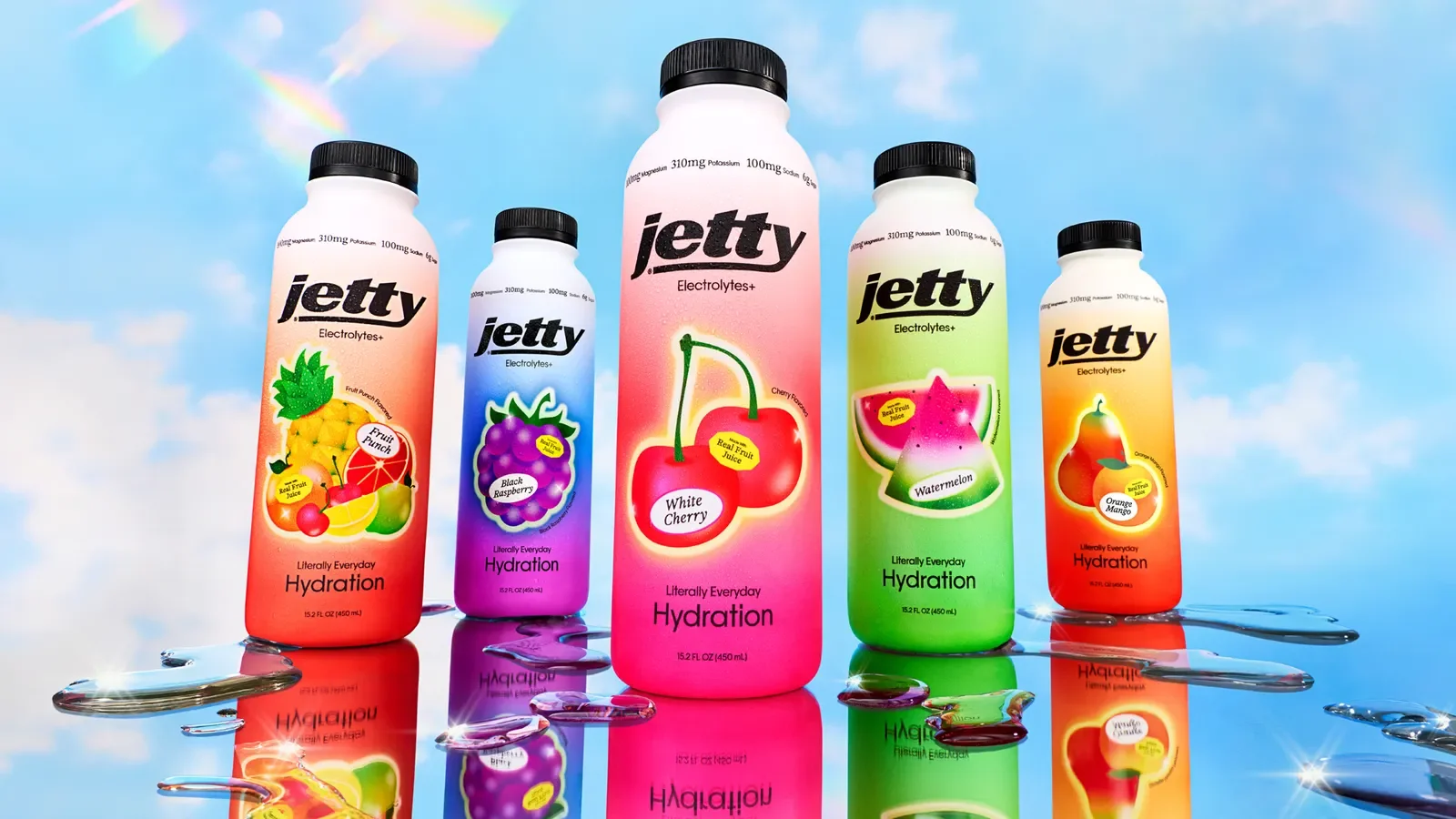
Each serving contains 100 milligrams of sodium, 310 milligrams of potassium and 100 milligrams of magnesium, alongside B vitamins and prebiotics. The ready-to-drink bottles contain 6 grams of sugar and 45 calories. Jetty launches in watermelon, orange mango, fruit punch, black raspberry and white cherry. Those details give shoppers a concrete way to compare the products with other drinks, although the figures alone can’t tell them how the beverages taste or whether they’ll fit a particular person’s needs.
Jetty’s lower-sodium framing is relative to the high-sodium products Ellsworth says she encountered. It gives the brand a point of difference within a category long associated with exercise and replenishment, while the additional ingredients broaden its appeal to people interested in functional beverages. But a longer ingredient list doesn’t automatically make a product more useful. Consumers will still decide whether the combination feels relevant, and whether they enjoy drinking it often enough for the daily-use proposition to hold.
The ready-to-drink format offers convenience, while powders give the brand another way to serve the same broad hydration idea. That pairing matters because people’s routines vary: some want a bottle they can pick up, while others may prefer a format they can prepare. Jetty is putting both options under one brand promise. If you’re working in this space, the question is whether the shared promise stays clear across formats, flavors and occasions.
The products are available online through Target and Amazon, as well as at Whole Foods stores nationwide. That mix gives Jetty access to digital shoppers and established retail locations. Availability is a useful first step, though shelf presence by itself doesn’t establish demand. The brand still has to make its proposition easy to understand at a glance, particularly in stores where hydration products compete for attention with familiar sports drinks and other functional beverages.
Competing beyond sports drinks
The Ellsworths are bringing experience from Poppi, the prebiotic soda brand sold to PepsiCo for close to $2 billion last year. Poppi helped spur competition in prebiotic soda; Jetty tests whether the founders can apply a similar consumer-focused approach to hydration. That experience may help with brand building, but the categories aren’t interchangeable. Soda and hydration drinks serve different expectations, and success in one doesn’t guarantee consumers will embrace a new product in the other.
Established players are also adjusting their offers. Gatorade has been reformulating its portfolio to remove artificial colors and adding electrolytes, while Powerade has expanded with Power Water, a flavored electrolyte water without artificial colors. Jetty’s lower-sodium, everyday framing puts it in the same broader shift toward products that reach beyond athletes. The established brands bring recognition; Jetty is trying to create distinction through its formula, ingredients and intended use.
That’s a difficult balance. When large brands adopt features associated with newer entrants, the category can become more familiar to consumers, but the original point of difference may become less distinct. Jetty will need to explain why its particular mix matters without relying on ingredient names alone. Here’s the thing: shoppers can compare sodium, sugar and calories, but those numbers won’t answer the most basic question of all—whether they want another drink in their routine.
Turning interest into a habit
There may be room to make that case: a Liquid I.V. survey found that 33% of Americans drink fewer than five glasses of water daily, even as many say hydration matters. Jetty’s challenge will be turning that gap between intention and habit into regular demand. The survey offers context for the problem the brand wants to address, but it doesn’t show that those respondents are looking for an electrolyte drink, or that they’ll choose Jetty.
That distinction matters. A stated concern about hydration is not the same as willingness to buy a particular beverage repeatedly. Jetty’s products have to compete with water and with other drinks people already know, while making a case for their added ingredients and specific electrolyte levels. The everyday framing could help if customers see the products as convenient and appealing; it could also leave the brand with a broad message that needs sharper proof at the point of purchase.
And yet, the broader idea is easy to understand: hydration products don’t have to be marketed only around athletic performance. Jetty is testing whether a consumer-focused brand, a moderate-sodium formula and multiple formats can make that idea commercially persuasive. The harder work starts after launch, when the brand has to turn awareness into a routine. That’s the test.



Discussion
Sign in to join the discussion.