Near Rome, Artefact uses a rotating coffee program and working historic bakery equipment to connect contemporary café culture with Italian craft.
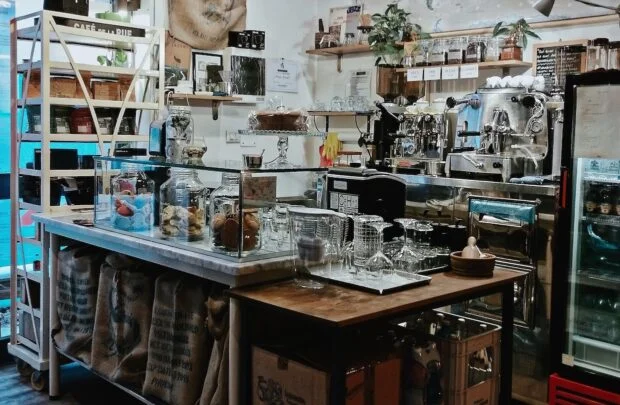
At Artefact Specialty Coffee in Frascati, old bakery machinery isn’t set dressing. It’s part of how founder Omar Cirulli connects Italian craft history with a contemporary café program—and gives industrial equipment a public life. The arrangement makes the room do two jobs: serve customers and show how the tools of food production shaped work. That’s a more demanding idea than decorating a café with vintage objects, because the machines have to mean something beyond their age.
The café opened on Nov. 12, 2023, in Frascati’s historic center, as a multiroaster shop serving Italian and international coffees. Its name points to the human skill embedded in its collection: “It reflects the idea that every object in the collection carries a story of work, ingenuity and technical knowledge,” Cirulli said. The principle gives the equipment a place in the business rather than treating it as a separate exhibit. Customers encounter the history while ordering coffee, in the same space where the café’s present-day work takes place.
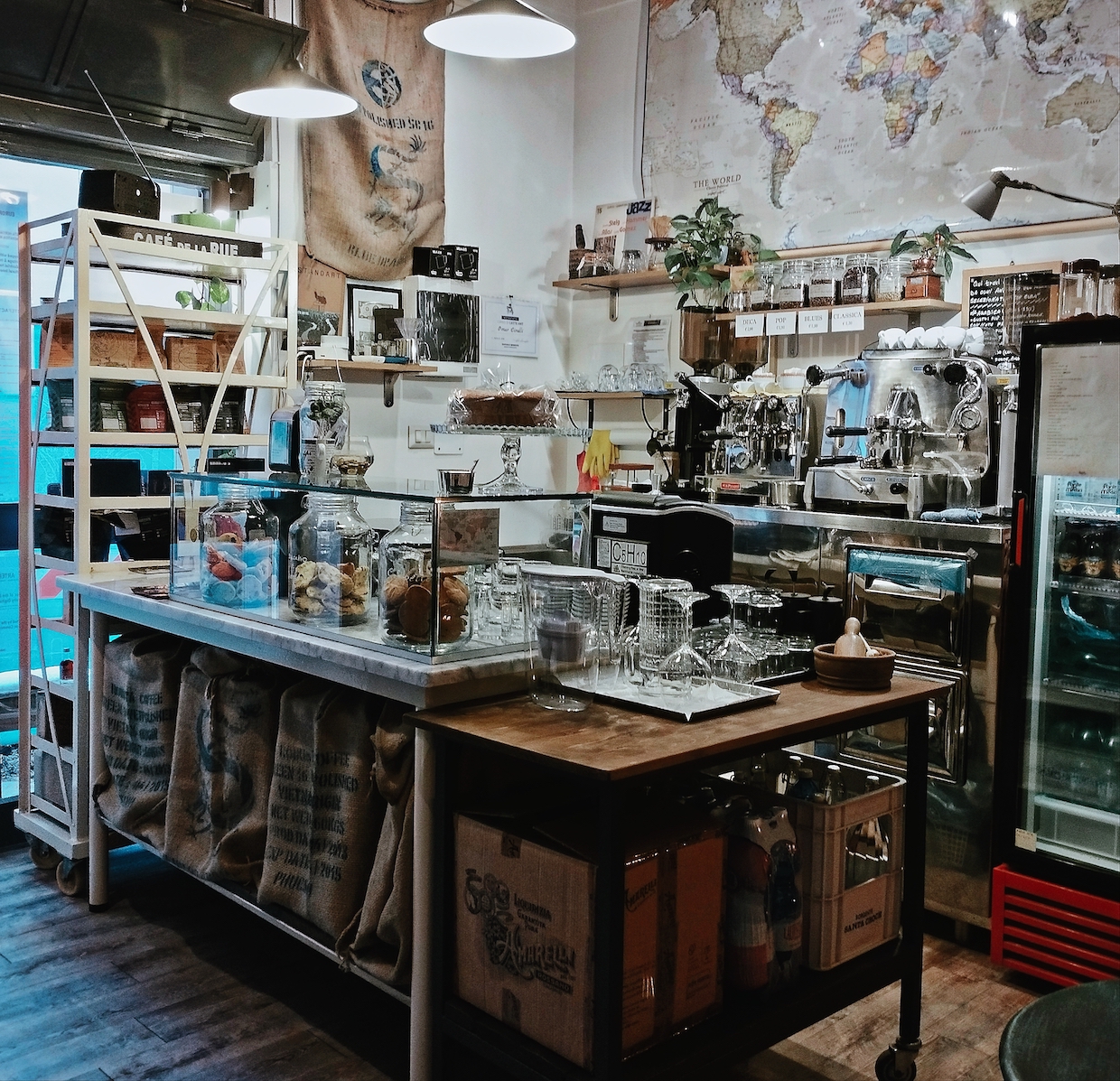
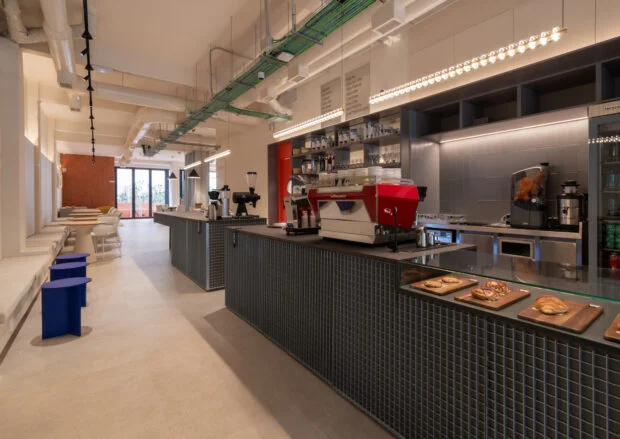
Artefact in Frascati, Italy. All images courtesy of Artefact.
Machinery made for use
Restored bakery tools shape both the room and its story. An old worktable now serves as the counter; metal racks once used on bakery trolleys hold café items. Cirulli wanted the objects to keep working, rather than turning the interior into a staged industrial display. That choice changes how visitors read them: a rack holding café supplies remains part of a practical environment, while its earlier role is still visible. The past is present in the furniture’s use, not just in a label beside it.
Among the collection’s most significant pieces is a reconstructed mechanical transmission system from the mid-19th century. It sits alongside an early-20th-century refining machine and arm mixer, offering a view of workshops that powered several machines through a shared system before each had its own motor. The arrangement points to a time when production depended on coordinating equipment around a common source of power. These machines make that shift tangible: they show how changes in power supply also changed the organization of work in a bakery.
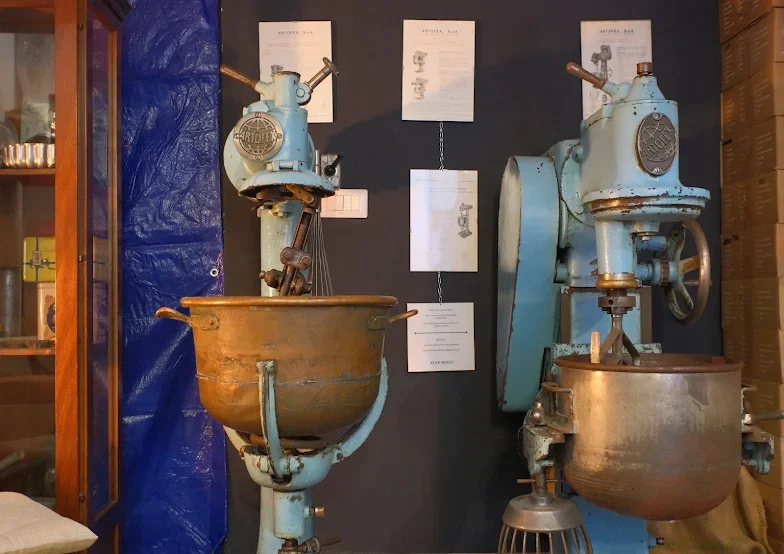
Cirulli demonstrates the equipment by operating its mechanisms manually. The movement helps explain how bakery power systems shifted from water to steam and, later, electricity. A machine that moves can communicate its design in a way a static display often can’t; the visitor can see how parts connect and imagine the sequence of work they supported. The objects turn the café into a working interpretation of technical change, with the machinery visible in daily use.
The project grew from family experience. During the COVID-19 pandemic, Cirulli began working more closely with his father, a technician who has spent years repairing and recovering professional bakery equipment. Restoring the machines led him to documents and materials about technological and social shifts in the bakery trade. He wanted to make that history accessible beyond the workshop. The connection matters: the café’s collection comes out of repair work, where knowledge is carried through practical decisions about how equipment functions and what can be preserved. (And this is the part most people overlook.) Preservation here depends on keeping technical understanding alive, not only keeping objects intact.
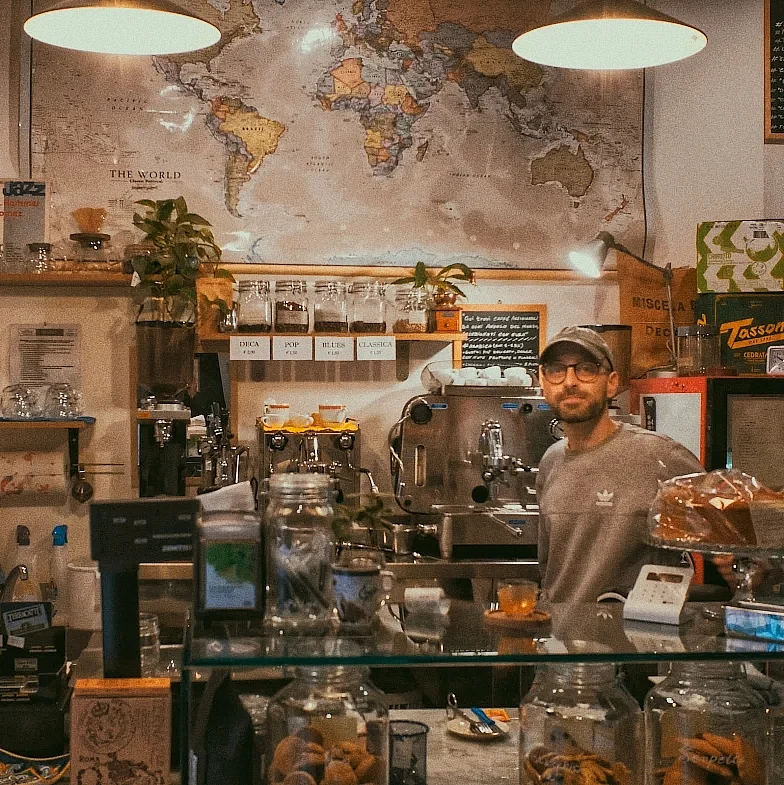
Artefact founder Omar Cirulli.
A coffee program built around a bridge
Cirulli’s brother, Mattia, entered the pastry business during the pandemic, opening a café and pastry shop with his partner, Valentina. Their businesses now supply Artefact with baked goods. Cirulli said his interest in coffee deepened as he watched his brother’s work bring him closer to café operations and preparation. The family connection gives the menu a practical link to the bakery history on display: the products and the machinery come from related traditions of making food by hand and with specialized equipment.
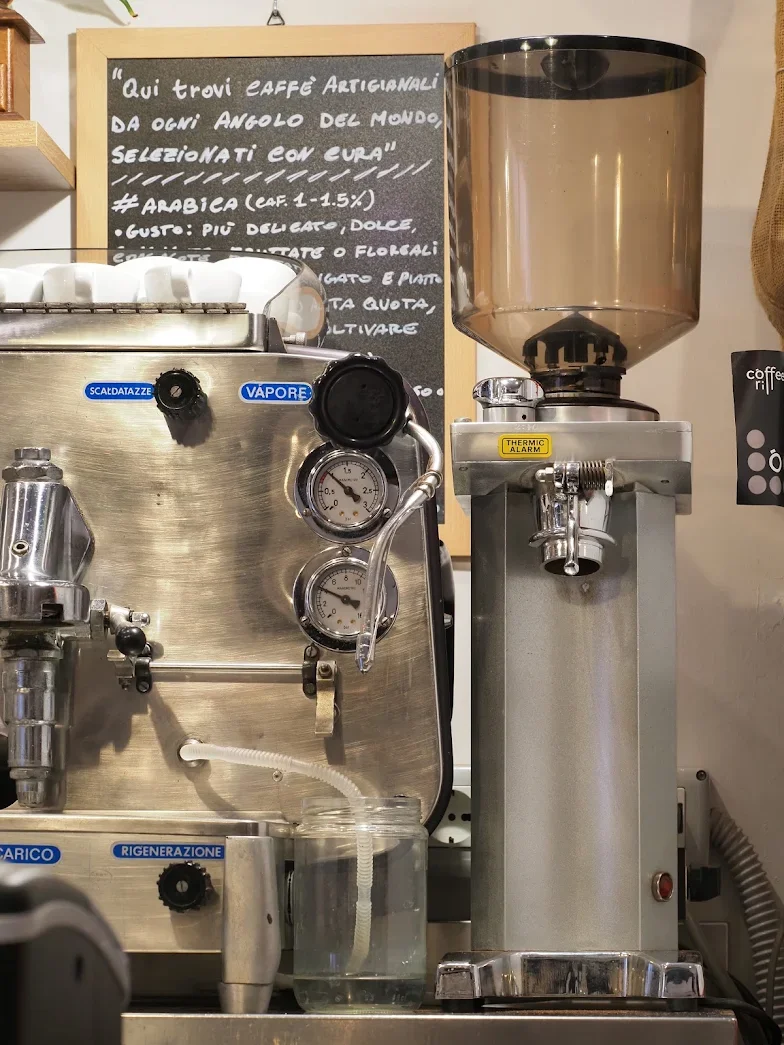
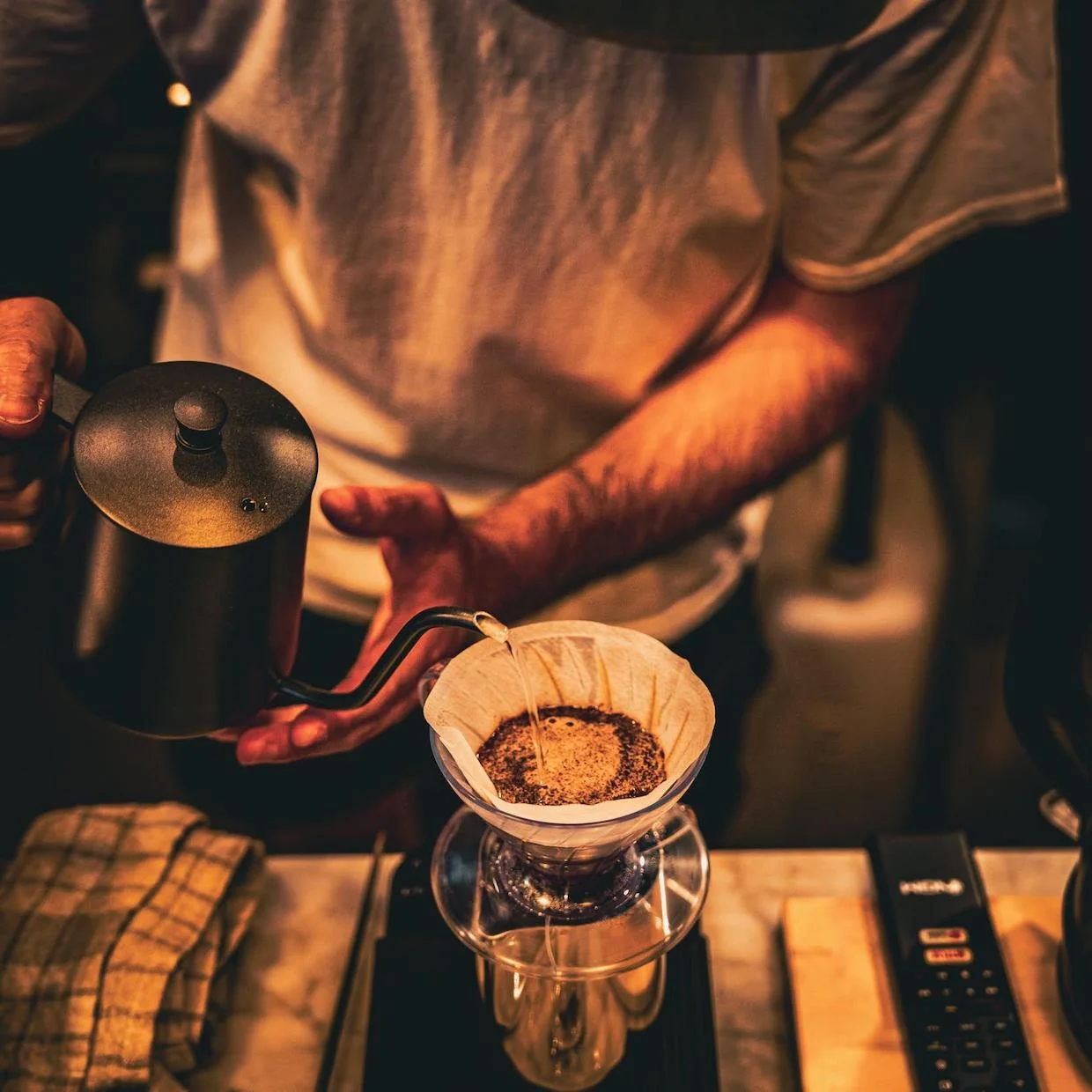
The espresso menu includes Coffeeriff, a small-batch roaster run by Johnny Lodo in Papozze, Italy. Artefact prepares espresso on a restored 1960s Faema E61, with La Pavoni Cellini and Europiccola machines also in use, alongside a Eureka Drogheria MCD4 grinder. Rotating coffees are available as V60 pour-overs. That mix of equipment and brewing styles gives the shop room to serve familiar espresso while offering customers a different way to taste coffee. The machines are part of the café’s working kit, just as the bakery tools are part of its furnishings.
For Cirulli, specialty coffee and traditional Italian espresso belong in the same conversation. Espresso remains tied to everyday Italian social life; specialty coffee adds closer attention to bean origins, producers, roasting, extraction and flavor. Artefact’s menu puts that idea into practice, using a familiar format while inviting customers to explore different coffees. Here’s the thing: a bridge between those approaches has to work at the counter, where people make ordinary choices, rather than exist only as a statement about coffee culture.
Growth tied to public access
As Artefact approaches its third anniversary, Cirulli is considering a larger space that could display more of the collection and host additional public programming. He describes growth in terms of sustaining the café while preserving and sharing industrial heritage—not simply selling more coffee. The ambition also raises a practical question: how can a business make room for interpretation and events while continuing to serve its everyday customers? The source offers no answer yet, but the proposed expansion suggests that space is central to the project’s next stage.
That model gives Artefact a clear role in Frascati: a café where the equipment, the coffee and the family’s bakery experience all contribute to the same story. Its next step will depend on how much room the project can create for that story to reach the public. This is more significant than it looks: small businesses can make working history accessible in ways a dedicated display might not, provided the objects remain connected to the skills and labor that gave them purpose. If you're working in this space, Artefact offers a useful reminder that heritage can be part of a business’s daily routine. The test will be whether a larger setting deepens that public connection without making the café’s original idea harder to experience.
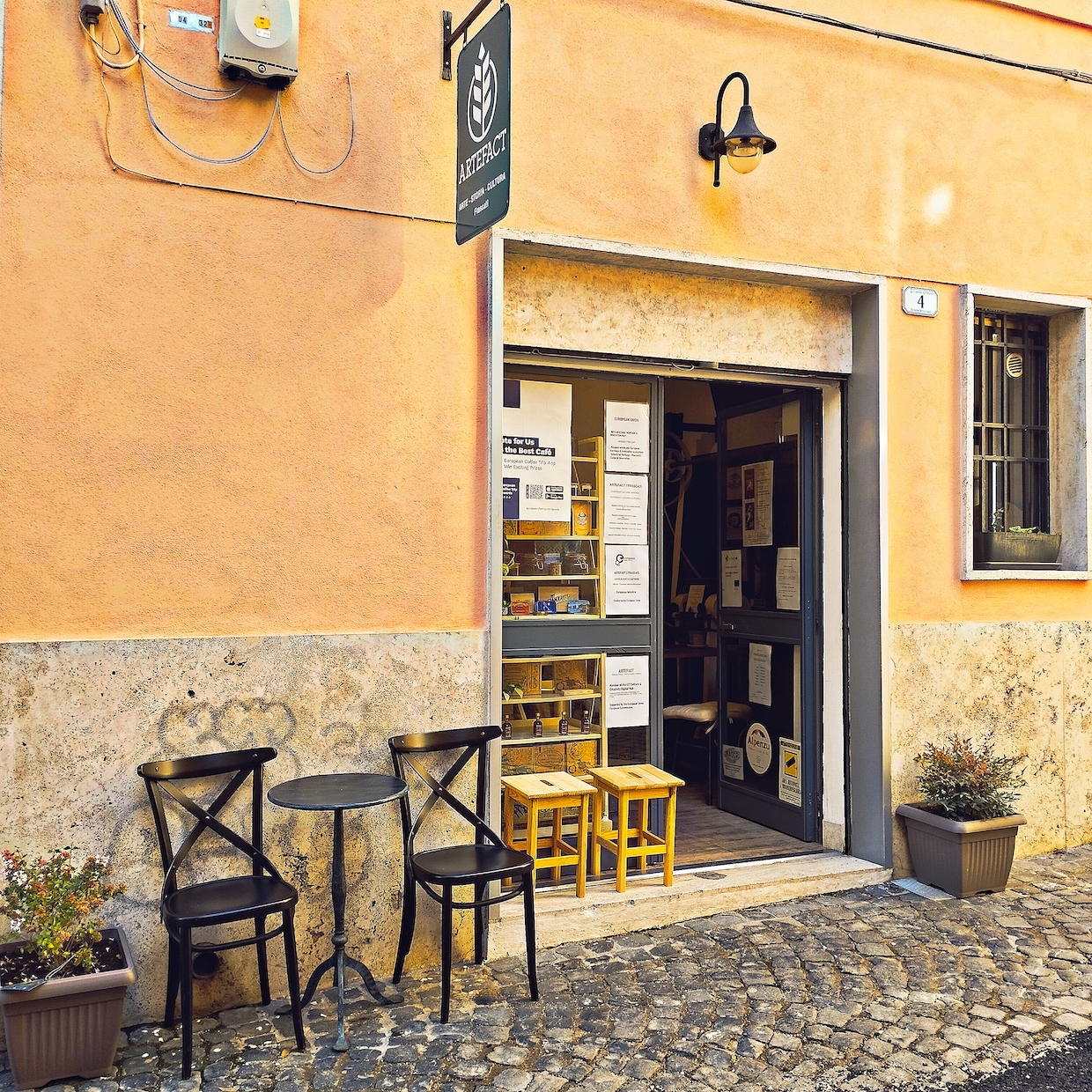
Artefact is at Via Janari 4 in the historic center of Frascati, Italy.
Discussion
Sign in to join the discussion.