Berd Studio’s 400-square-meter MIKSI pairs dedicated espresso and filter bars with workspaces, meeting rooms and an interior patio.
A café organized around coffee and work
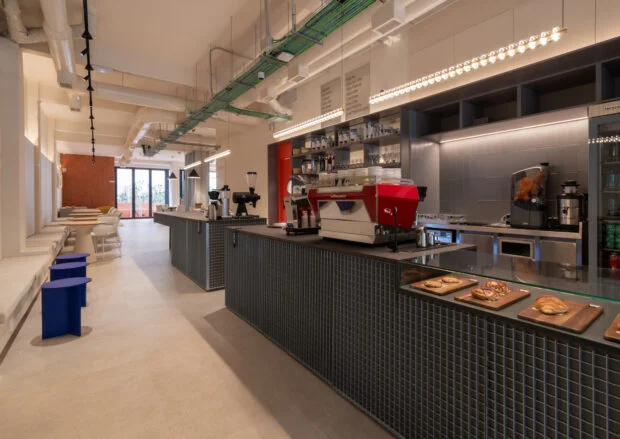
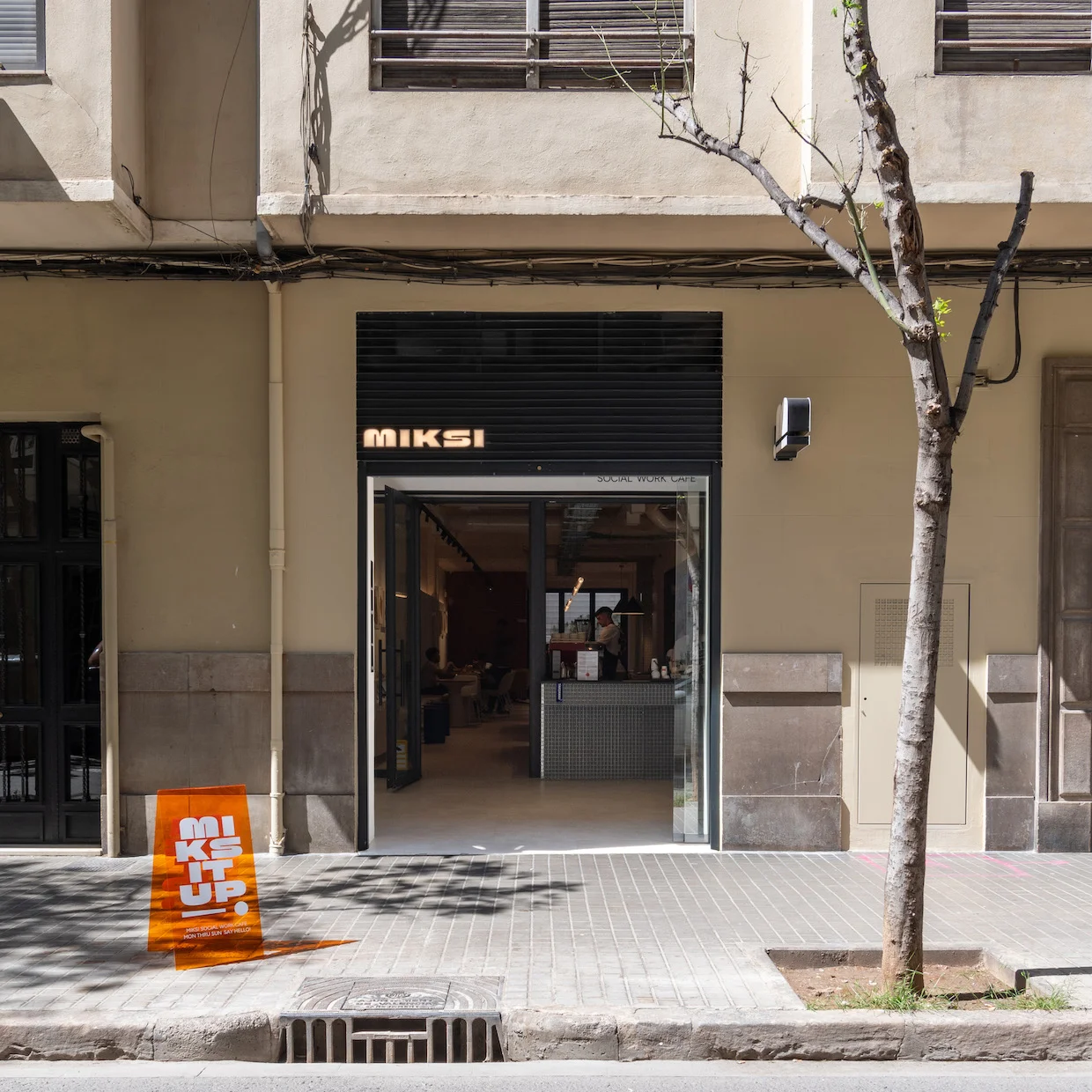
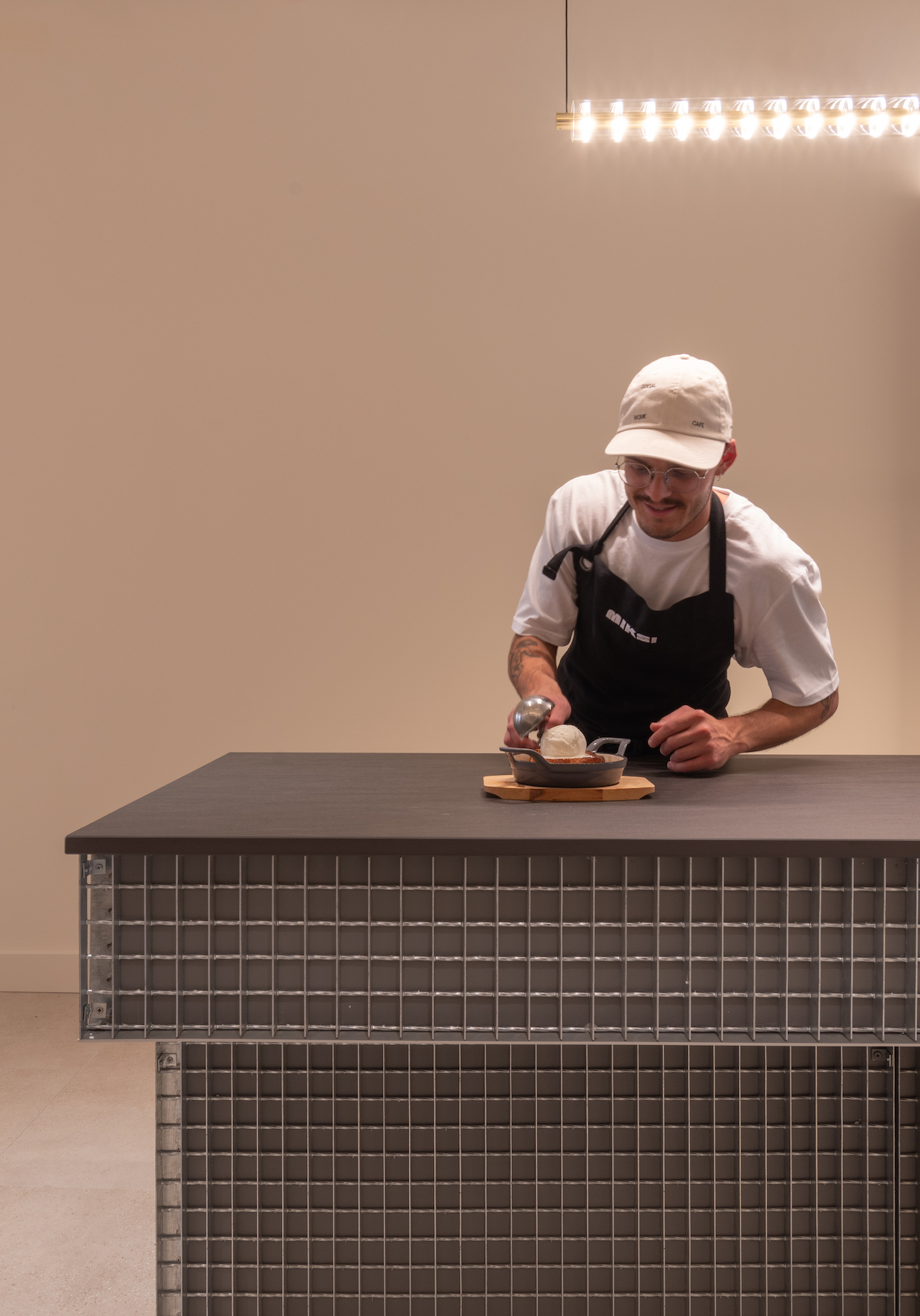
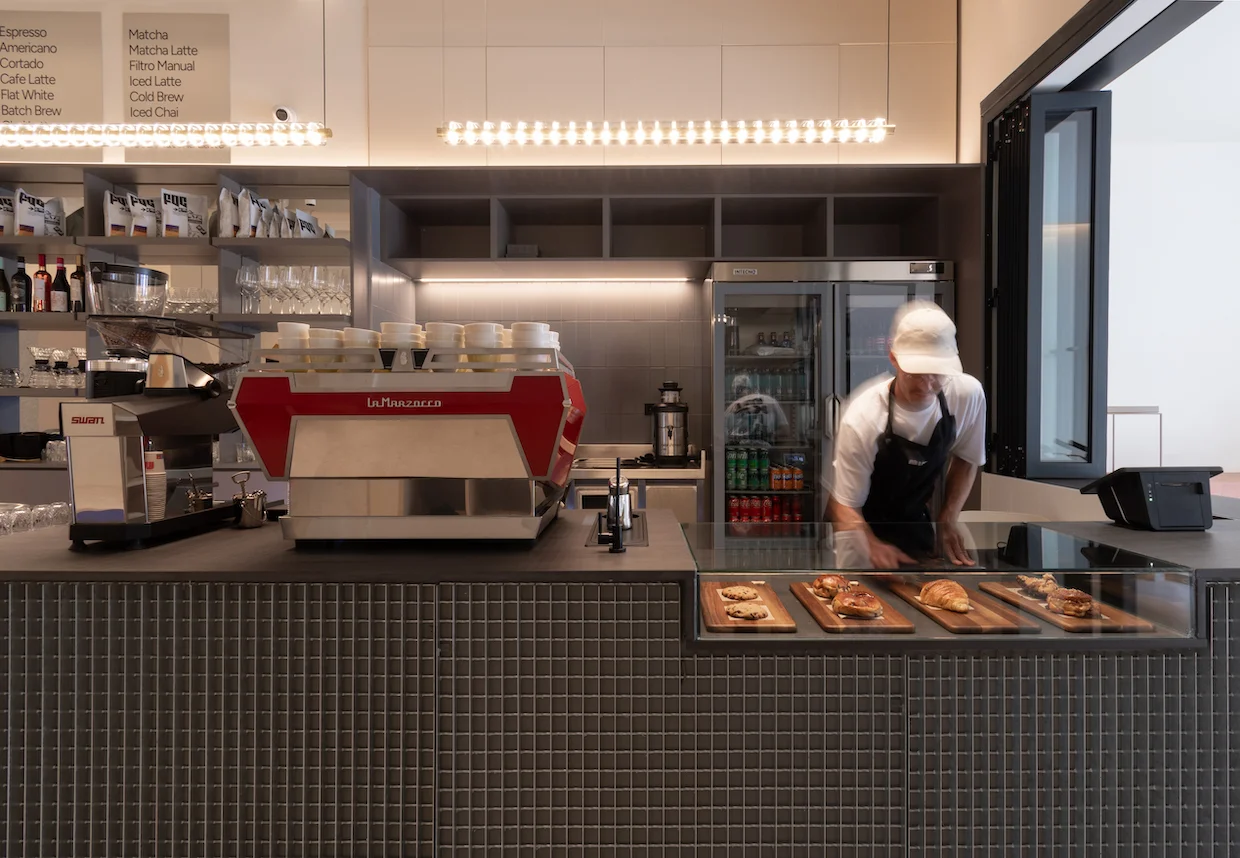
At MIKSI Social Work Café, coffee service shapes the route into a coworking space. The 400-square-meter venue in Valencia’s Cánovas neighborhood moves from takeaway coffee to dedicated espresso and filter bars, then opens into work areas. That sequence gives the café a clear operating logic: customers can drop in for a drink or stay to work.
The layout makes the first impression operational as well as visual. A visitor arriving for takeaway can use the front of the venue without passing through the quieter work areas, while someone staying longer can move deeper into the space. That separation gives the café a way to serve different kinds of visits under one roof, though its success in practice will depend on how well the zones manage sound and traffic at busy times.
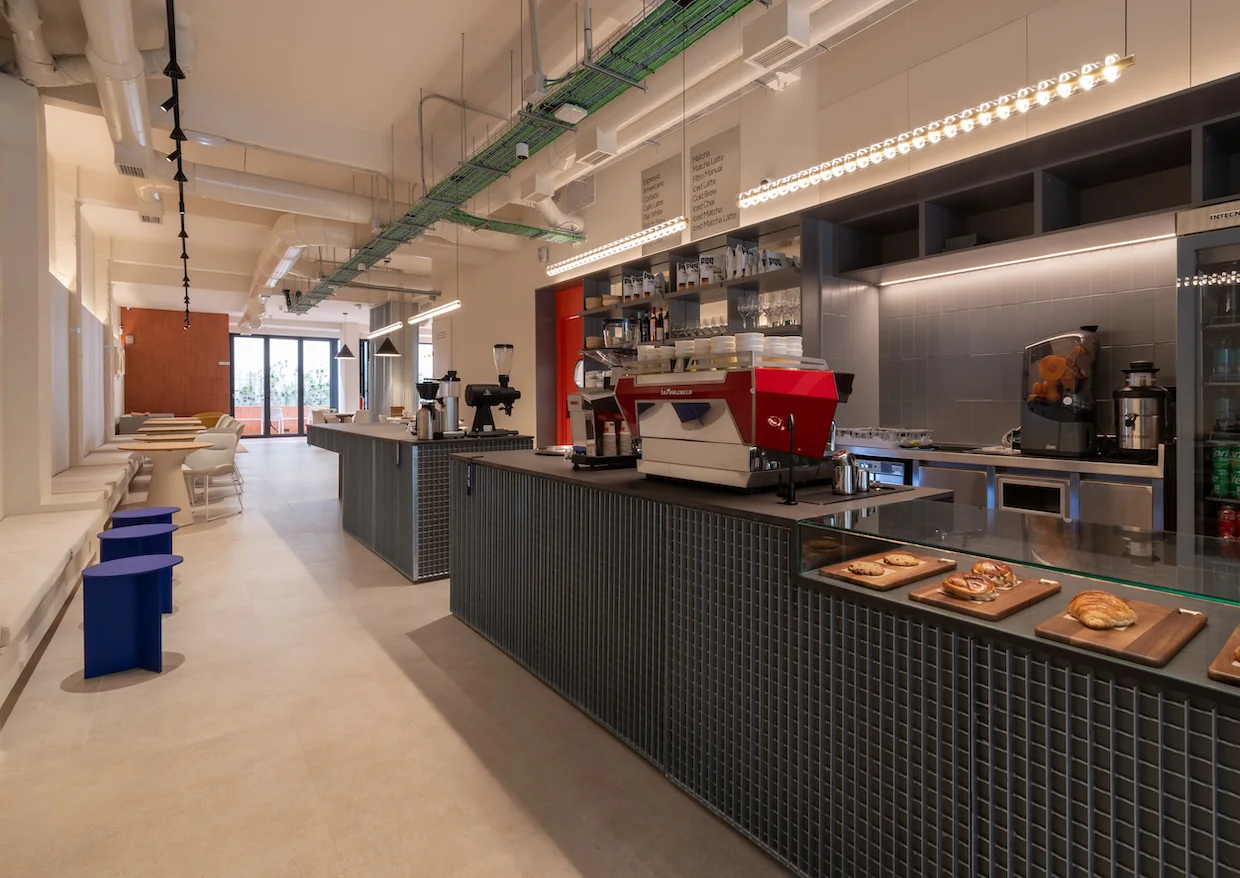
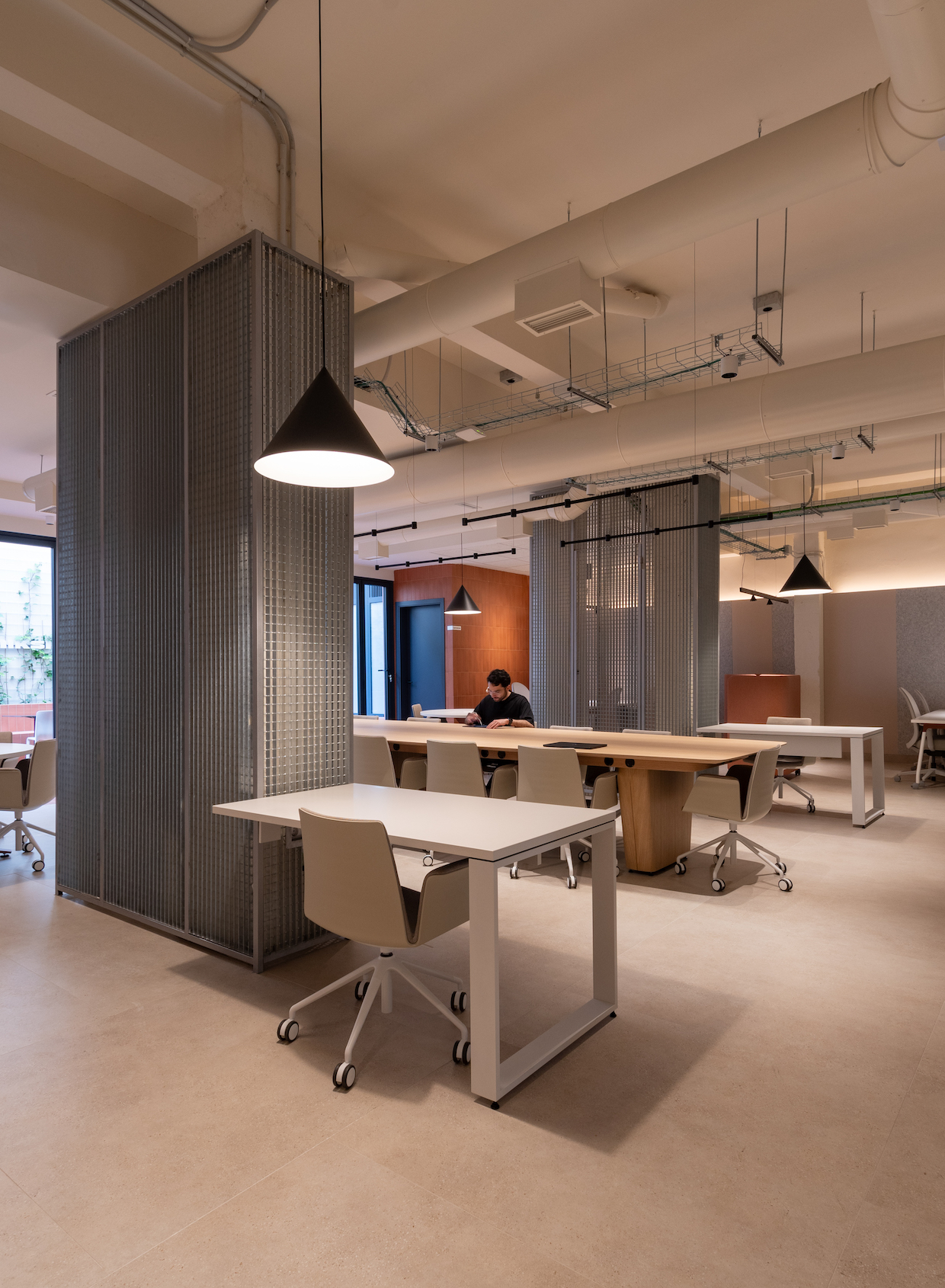
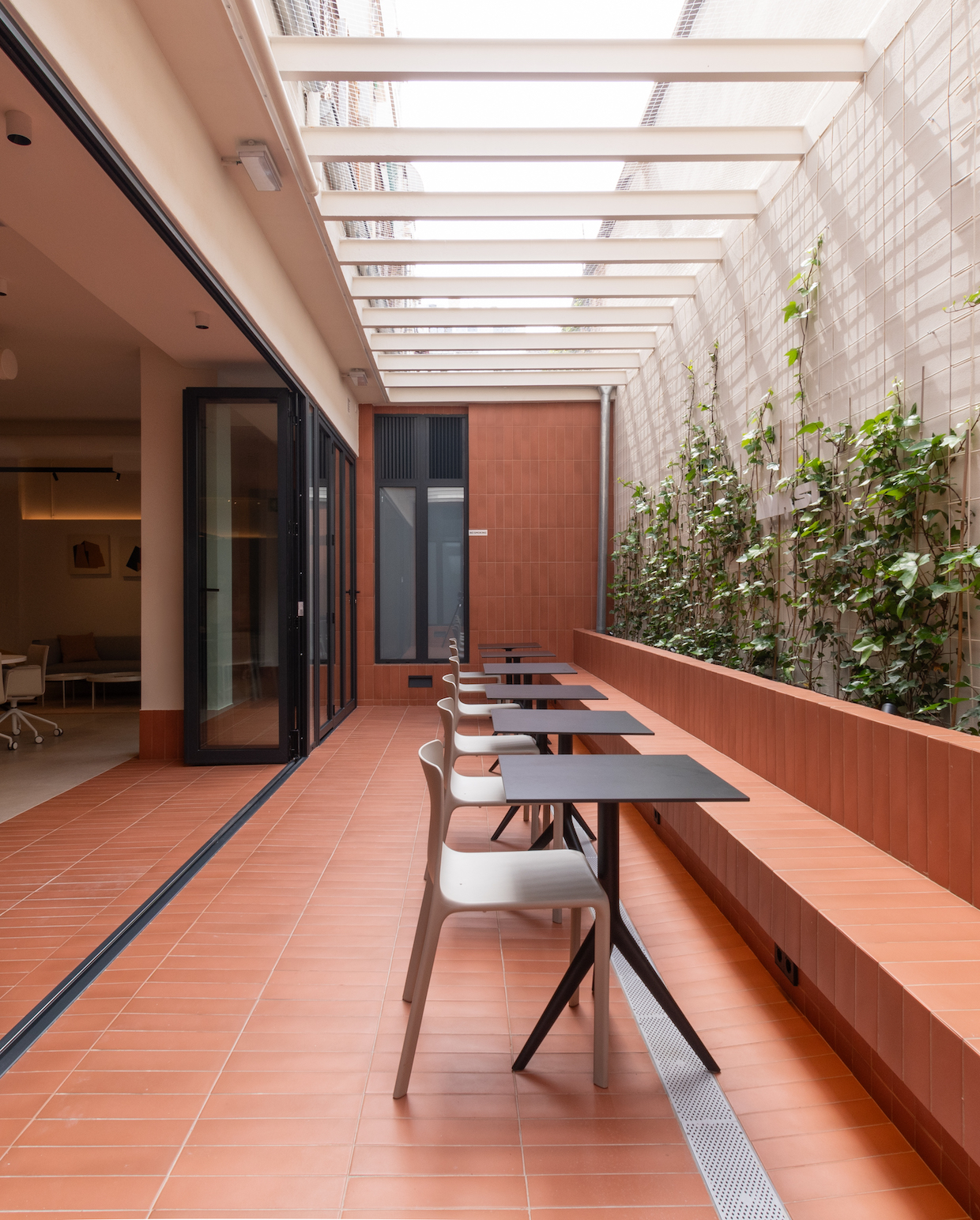
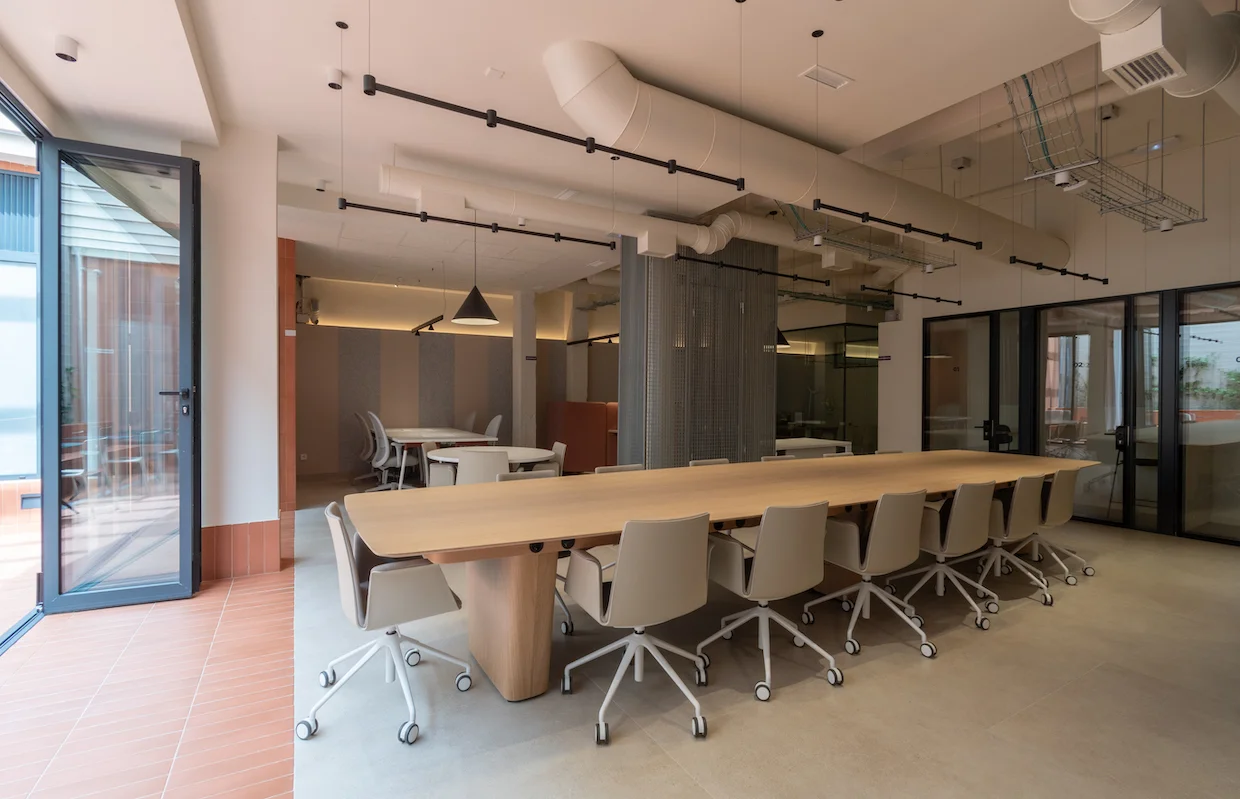
Designed by Berd Studio and completed in 2025, MIKSI brings specialty coffee and professional work under one roof. Its mix of individual desks, shared zones, private offices, phone booths, meeting rooms and lounges lets people choose between focused work and group activity. An interior patio connects the workspace with the outdoors and supports natural ventilation in Valencia’s mild climate.
That range of settings matters because “coworking” covers very different needs: a brief call, a stretch of solo work, or a meeting that requires a group to gather. MIKSI’s assortment suggests the design is intended to accommodate those shifts without asking every customer to work in the same way. The patio adds another kind of choice, with a connection to outside air and daylight within the overall plan.
From coffee counter to coworking space
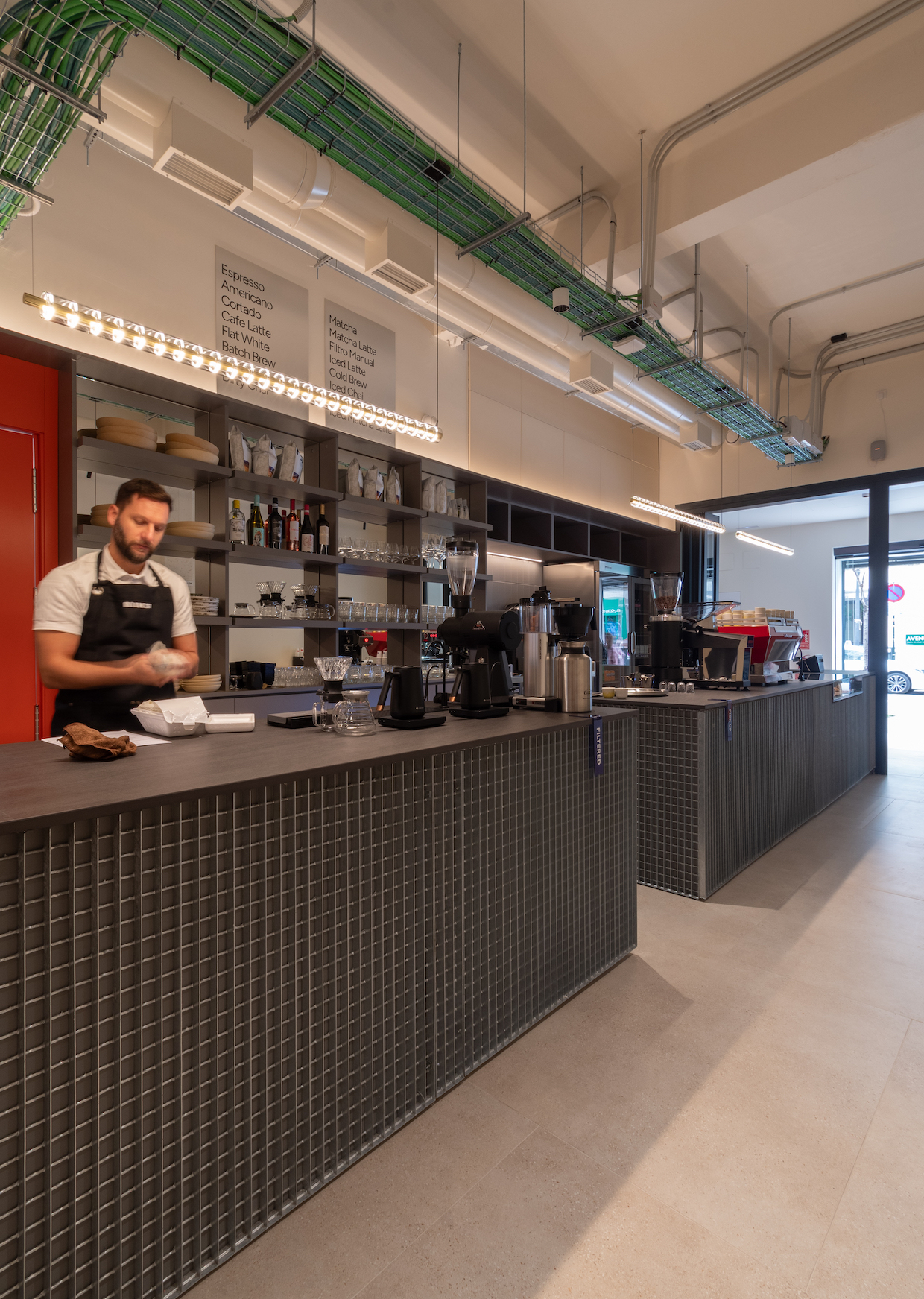
That arrangement makes the café more than a front desk for the coworking area. The separate coffee stations distinguish quick takeaway service from espresso and filter preparation, while the transition toward the work zones creates room for longer visits. Berd Studio describes the plan as a considered progression from one use to the next.
It’s a useful distinction. A café that also hosts people working for hours has to account for customers who want a fast transaction and those who expect a place to settle in; the arrangement gives each group a legible route through the venue. The design also puts coffee service at the center of the experience, instead of treating it as an amenity attached to desk rental.
The studio also ties the design to specialty coffee’s emphasis on traceability. Its stated approach carries that idea into material choices and supplier selection, with transparency and quality guiding both the space and its daily operations. For a café that doubles as a workplace, that emphasis connects the product behind the bar with the decisions built into the room.
That link is persuasive as a design intention, but it’s also a standard the venue will have to sustain through daily choices. Traceability is easiest to communicate as a principle; the more revealing test is whether it informs sourcing and operations consistently. The project description outlines the aim, without detailing how those decisions are measured or presented to customers.
Materials for a shared environment
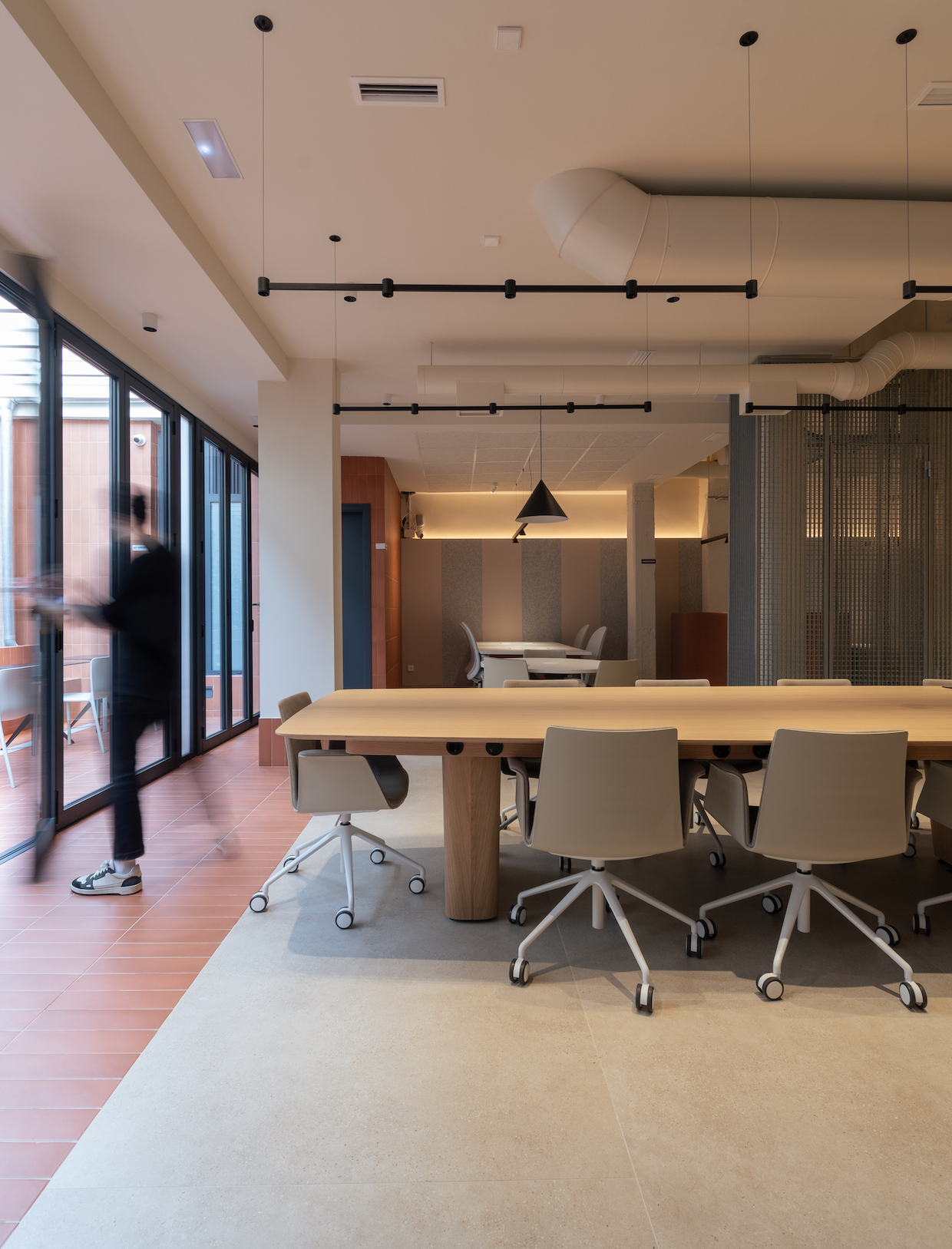
MIKSI’s industrial palette combines galvanized steel, ceramics, polished concrete and neutral porcelain. Ecopanel acoustic panels help limit noise and reverberation, a practical measure in a venue meant to support conversation, events and concentrated work in the same setting.
Material choices do more than establish a visual identity here. Hard surfaces such as concrete and steel can make a room feel direct and durable, but they can also contribute to sound carrying across a shared space. The acoustic panels address that tension. This is more significant than it looks: in a venue asking people to work alongside coffee service and social activity, comfort depends partly on how well the room handles noise.
The interior is also planned to host workshops, tastings, pop-ups and other events without giving up its everyday role as a workplace. Soma Arquitectura developed the coworking furniture proposal, helping define a layout intended to accommodate both individual focus and collaboration. Berd Studio says the result is flexible and ergonomic, with a consistent visual character.
Flexibility sounds appealing, but it comes with a practical trade-off. A room arranged for an event may not offer the same calm or desk availability as it does during a typical workday, and furniture has to serve more than one purpose without making each use feel compromised. If you’re working in this space, the key question is how the venue handles those changes in its daily schedule.
Energy-saving systems include air-recirculation equipment from Daikin. The project also prioritized local materials and nearby suppliers, extending its sourcing approach from the café’s coffee ethos to the build itself.
Those choices give the project a broader account of what its values mean: they reach beyond the coffee menu into construction and building services. The stated priorities are clear, though the available description doesn’t quantify their environmental effect. A restrained reading is more useful than treating local sourcing or energy-saving equipment as proof of a particular outcome.
What the hybrid model asks of the space
Completed in 2025 by a team led by Berd Studio, with furniture planning by Soma Arquitectura, MIKSI’s defining move is its linked sequence of coffee service, work and gathering. The design leaves the venue room to shift between daily desk work and community events while keeping specialty coffee at the center.
The model makes a clear promise: customers can move between a drink, a desk and a shared event without changing venues. That promise depends on the same spaces serving different purposes at different times, so the layout’s success will be judged in use as much as in photographs. And yet, the design’s emphasis on distinct service points, varied work settings and acoustic treatment shows an awareness of the friction that can arise when café life and focused work overlap.
For operators, the broader lesson is that a hybrid venue needs more than a coffee counter beside desks. It needs a plan for circulation, noise, privacy and changing activity, along with a reason for the two uses to reinforce each other. At MIKSI, that reason is specialty coffee and a deliberately connected route through the space. A thoughtful premise. The day-to-day balance is the test.


Discussion
Sign in to join the discussion.