New research reveals that higher pressure in espresso brewing doesn't equate to faster extraction, challenging common assumptions among baristas.
Understanding Espresso Dynamics
The results from a recent study challenge the widely held belief that more pressure leads to faster espresso extraction. Researchers found that high brewing pressures, typically used in cafés, affect how espresso grounds behave in ways that defy standard physics. As pressure rises, the flow rate of water through the coffee puck doesn't always increase, leading to unexpected extraction characteristics. This calls into question years of accepted practices among baristas and coffee aficionados alike, emphasizing the complex interplay between pressure, flow, and flavor extraction.
Research Insights
The study, published in the journal Physics of Fluids on June 23, stems from inquiries posed by baristas at a coffee trade event regarding the common issue of channeling in espresso. Channeling occurs when water finds easier routes through the grounds, resulting in unbalanced coffee extraction. This insight highlights that what may seem like a simple brewing flaw can be traced back to the fundamental physics of how espresso interacts under pressure. It's the kind of knowledge most casual coffee drinkers overlook, yet it could change how even seasoned baristas approach their craft.
A Thorough Laboratory Setup
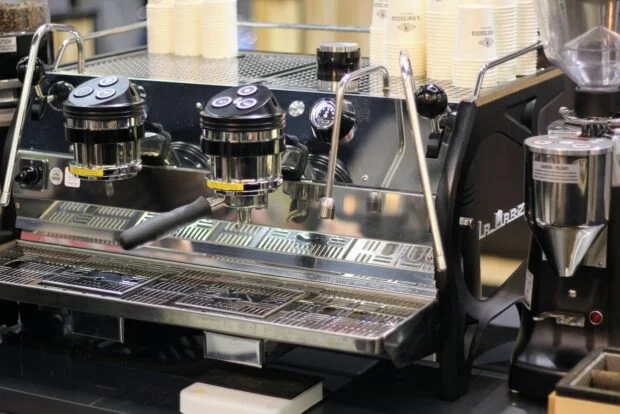
To investigate these phenomena, the research team utilized a modified 2-group Sanremo Zoe Competition espresso machine equipped with pressure sensors and a data collection system. This setup allowed them to track brewing parameters precisely. They used specialty coffee sourced from Brazil's Igarape region, prepared at a consistent 18.50 grams per shot, ground on a Fiorenzato F64 EVO grinder. The rigorous attention to detail in their equipment and coffee selection echoes practices in high-stakes cuisine where precision and quality can significantly impact the final product. This also illustrates how scientific methods are increasingly being applied to refine the coffee-making process.
Pressure vs. Flow Rate
Testing pressures from 1 to 12 bars, the researchers conducted long extraction brews—approximately 120 seconds—to evaluate how the puck reacted when most soluble compounds had already been extracted. At lower pressures, the coffee puck behaved like a typical porous material, with increased pressure correlating with increased flow rates. However, in the 6 to 9 bar range, commonly used for espresso, flow rates plateaued instead of climbing further. The puck's behavior can be modeled as a poroelastic material, where deformation under pressure restricts water flow through the puck. This nuanced relationship indicates that more isn't always better; achieving optimal extraction might require strategic tinkering rather than merely cranking up the pressure. The results serve as a reminder that simple rules in culinary practices often contain more complexities than they suggest.
Lisicki, one of the authors, stated that this compaction effect had previously been acknowledged in coffee circles, but the study provided the first systematic evidence. The findings allow for a more detailed theoretical description of this behavior, bridging the gap between the theoretical and practical aspects of espresso brewing. More importantly, it emphasizes a shift away from traditional dogmas, encouraging professionals to rethink how they interpret pressure readings and flow dynamics.
Dissolution Dynamics
The study further explored how the total dissolved solids (TDS) concentration changes over time during extraction. In a controlled experiment, researchers divided the espresso into 5-second segments, revealing that the initial liquid had the highest TDS concentration, around 25%, which dramatically decreased after about 60 seconds. This variation in extraction time plays a significant role in the overall flow and consistency of espresso, yet it's often an overlooked aspect in many cafés. The implications here are substantial: if you’re crafting espresso, the timing of your pour can have a profound effect on your beverage's taste and texture. This isn't just a technical detail; mastering it could elevate the coffee experience for patrons.
Structural Changes in the Puck
Employing X-ray microtomography, the team visually analyzed the coffee puck before and after brewing. Scans depicted significant alterations such as swelling and cracks, illustrating the physical changes it undergoes during the extraction process. They also observed that altering the brew cycle—by stopping and restarting—could modify flow rates without enhancing the dissolution of compounds, indicating that running multiple brews through the same puck might lead to inconsistent extractions. It’s this physical transformation that illustrates just how dynamic the espresso extraction process can be and underlines a reality that many baristas have intuitively felt but lacked scientific backing to articulate. What this means for you, if you’re working in this space, is that a holistic understanding of these structural changes can lead to better practices, including perhaps limiting the number of extractions per puck.
A Broader Context
This research adds to an increasing body of work focused on espresso extraction mechanics and mathematical modeling. Earlier studies have already shed light on how various factors like grind size and preparation techniques influence espresso quality. This study offers clarity on the relationship between brewing pressure and extraction speed, underscoring that while higher pressure is commonly assumed to improve results, it may introduce complications that can detract from the espresso's overall quality. Baristas and coffee enthusiasts should think critically about how new findings like this could reshape brewing protocols in their cafés. The implications for baristas are significant: achieving consistency may require a more nuanced approach where factors like grind distribution and tamping techniques are carefully balanced with brewing pressure. The research was supported in part by the University of Warsaw's IDUB program.
Implications and Future Outlook
As coffee science continues to expand, this study underscores the necessity for baristas to stay informed and rethink established methods. In the competitive world of specialty coffee, even small adjustments can lead to significant flavor differences. Brainstorming sessions about espresso might soon involve engineers and data analysts rather than just seasoned baristas, highlighting the increasing importance of data-driven insights in beverage preparation. The future of espresso brewing isn't just about making better machines or sourcing the finest beans; it’s about understanding the mechanics of extraction and optimal conditions for flavor enhancement.
If you have thoughts or experiences related to this research, reach out to DCN’s editors. For ongoing updates in the coffee sector, consider subscribing to the DCN newsletter.
Discussion
Sign in to join the discussion.