The deal covers seven brands and two coffee plants, with Kraft Heinz retaining a 30% stake and directing expected proceeds toward debt reduction.
Kraft Heinz is stepping back from a portfolio of legacy coffee brands in a $650 million deal with One Rock Capital Partners. The sale gives the private equity firm control of the North American coffee business while Kraft Heinz keeps a 30% non-controlling stake. That structure gives Kraft Heinz a continuing financial interest, but it puts the brands and their day-to-day operations under a new owner. The distinction matters: the company is reducing its direct exposure to the business without making a complete exit.
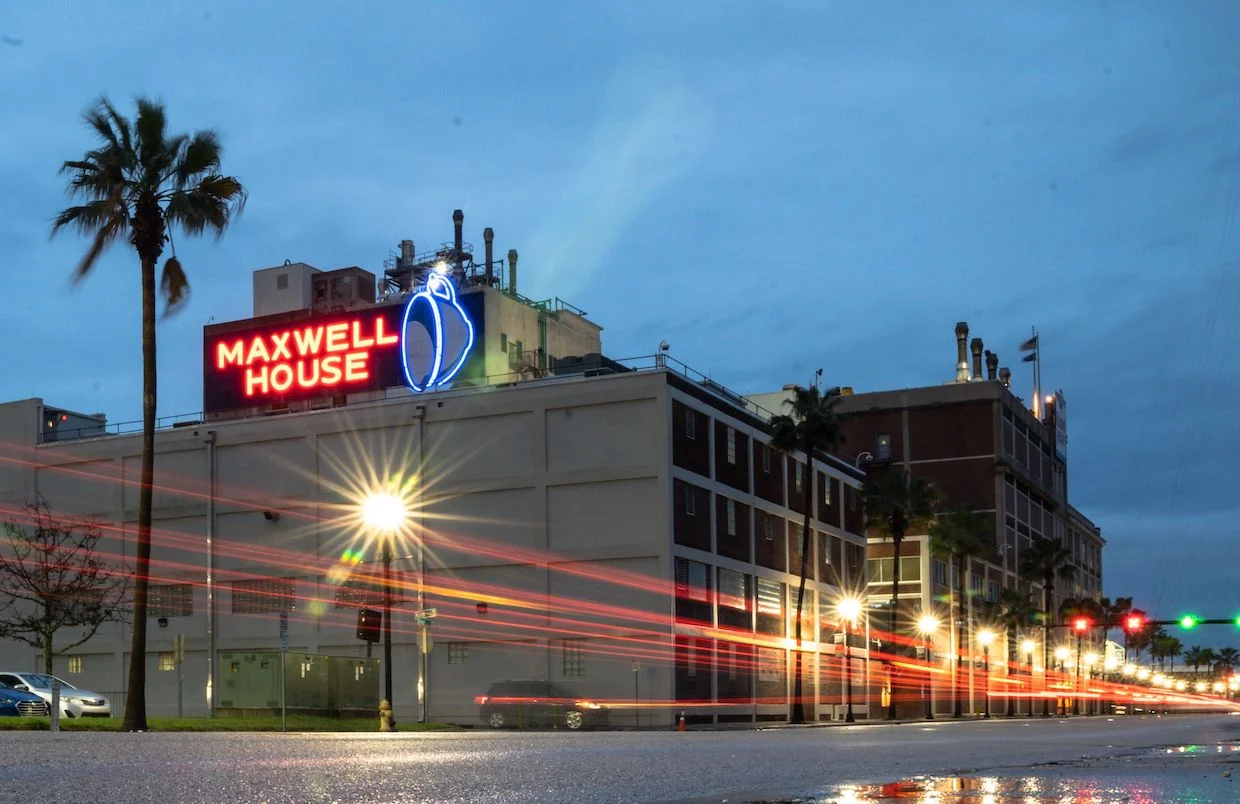
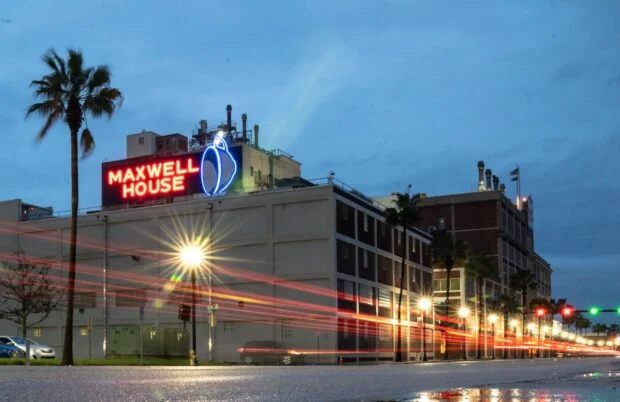
The Maxwell House factory in Jacksonville, Florida.
The business includes Maxwell House, Gevalia, Nabob, Yuban, Tassimo, Ethical Bean and Sanka, as well as manufacturing sites in Jacksonville, Florida, and Vancouver, British Columbia. The package therefore spans more than a collection of names: it includes production facilities and an operating workforce alongside brands with different histories and market positions. About 250 employees in manufacturing, sales, marketing, finance, human resources and research and development are expected to move with the business. That transfer suggests One Rock is taking on a functioning operation, with capabilities needed to make and sell the products, rather than simply acquiring brand rights.
Kraft Heinz expects to receive roughly $500 million in net cash after taxes and says it will use the proceeds to reduce debt. The companies announced the agreement on Nov. 4; they expect the transaction to close in mid-2027, subject to regulatory approval and other conditions. Financial details for the coffee division, including revenue and profitability, weren’t disclosed. That missing information makes it difficult to judge the sale price against the business’s earnings or to assess how much of Kraft Heinz’s debt reduction the proceeds could support. The headline figure is clear; the division’s underlying performance isn’t.
A long-running coffee portfolio changes hands
The divestiture marks a major shift for Kraft Heinz, whose predecessor companies have owned Maxwell House for decades. The brand came through General Foods, which joined Kraft in 1989 under Philip Morris. It stayed with Kraft Foods Group after the 2012 separation that created Mondelēz International, then became part of Kraft Heinz in the 2015 merger with H.J. Heinz. Through those corporate changes, Maxwell House remained attached to a succession of large food companies. Now it’s moving into a business controlled by a private equity firm, a different ownership setting that may bring different priorities and decision-making.
Kraft Heinz added a specialty coffee foothold in 2018 by acquiring the assets of Ethical Bean, a Vancouver roaster founded in 2003 and certified Fairtrade and organic. That brand is included in the sale alongside the company’s larger established labels. The portfolio is consequently varied: it brings together familiar mass-market names, a coffee system brand and a smaller specialty roaster. Managing those products under one owner could give One Rock room to make distinct choices for each, though the agreement announcement doesn’t spell out what those choices will be.
This is more significant than it looks. A portfolio sale can change how a group of brands receives investment and attention, even when consumers continue to see the same names on shelves. For employees, the transition also reaches beyond corporate ownership: manufacturing, sales and product development roles are all expected to move with the business. The announcement doesn’t describe how the new owner will organize those teams or whether it plans to change the products. For now, the clearest fact is that the operating business is changing hands with its people and sites.
One Rock’s plan and Kraft Heinz’s wider reset
One Rock says it plans to invest across the brands, with a focus on growth, product development, consumer experience and retailer relationships. “We intend to accelerate investment across the brand portfolio to drive growth and innovation, enhance the consumer experience, and strengthen relationships with retail partners,” said Managing Partner Tony W. Lee. The stated priorities are broad, and the announcement doesn’t identify specific products, spending levels or deadlines. The test will be whether the new owner can translate those aims into changes shoppers and retailers can see.
The acquisition fits One Rock’s history of buying and restructuring businesses, including its 2021 purchase of Nestlé’s North American bottled water business. That history offers context for the buyer’s approach, but it doesn’t establish what will happen to these coffee brands. Private equity ownership often puts a sharper focus on a business’s costs, investment needs and growth prospects. Here, One Rock has publicly emphasized investment and product development; how it balances those ambitions with the practical demands of running manufacturing sites remains to be seen.
For Kraft Heinz, the sale follows a broader restructuring effort: the company announced plans in September 2025 to split into two publicly traded businesses, then paused that plan in February. The coffee transaction is a concrete portfolio change amid that shifting corporate agenda. It converts a business into cash for debt reduction while leaving Kraft Heinz with a minority stake. That may simplify its direct operating responsibilities, but the retained interest means the company will still have a financial connection to the coffee operation.
Coffee costs have also been a pressure point. In its 2025 financial results, Kraft Heinz cited higher coffee prices as a factor behind consumer price increases, alongside falling coffee sales volumes. Those two pressures point in different directions for the business: input costs can squeeze margins, while weaker volumes can limit the ability to offset them through sales. The disclosed information doesn’t show how strongly either factor affected this division, or whether they shaped the decision to sell. Still, the timing places the transaction in a category Kraft Heinz has already identified as challenging.
What the sale means next
The sale transfers the brands and operating sites to a new owner while leaving Kraft Heinz with a minority interest and cash to pay down debt. The expected mid-2027 closing gives the parties time to satisfy the stated conditions and prepare the handover. Until then, the announcement describes a planned transition, not a completed one. If you’re working in this space, the central question is whether One Rock’s promised investment can support the brands while the business navigates coffee costs and the sales-volume pressures Kraft Heinz has described.
And yet, the public details leave much unanswered: there’s no divisional revenue or profit figure, and no specific account of what One Rock will change. The numbers here are underwhelming as a guide to the business’s performance, even if the $650 million price gives the deal a clear headline. (And this is the part most people overlook: ownership changes can be decisive for a company’s priorities even when customers see little change at first.) For now, the transaction is best read as a shift in control and capital allocation, with the operating results of the new arrangement still ahead.
A reset in ownership. Whether it becomes a reset for the brands is the harder question.
Discussion
Sign in to join the discussion.