Sherpa’s 60-square-meter Seoul cafe pairs restored building details, reclaimed timber and Korean craft traditions to give age a visible place in its design.
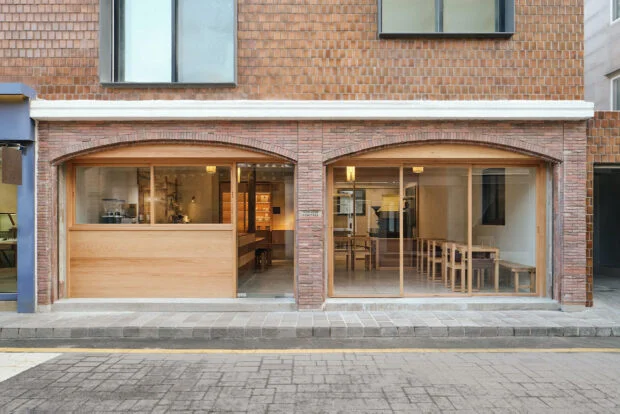
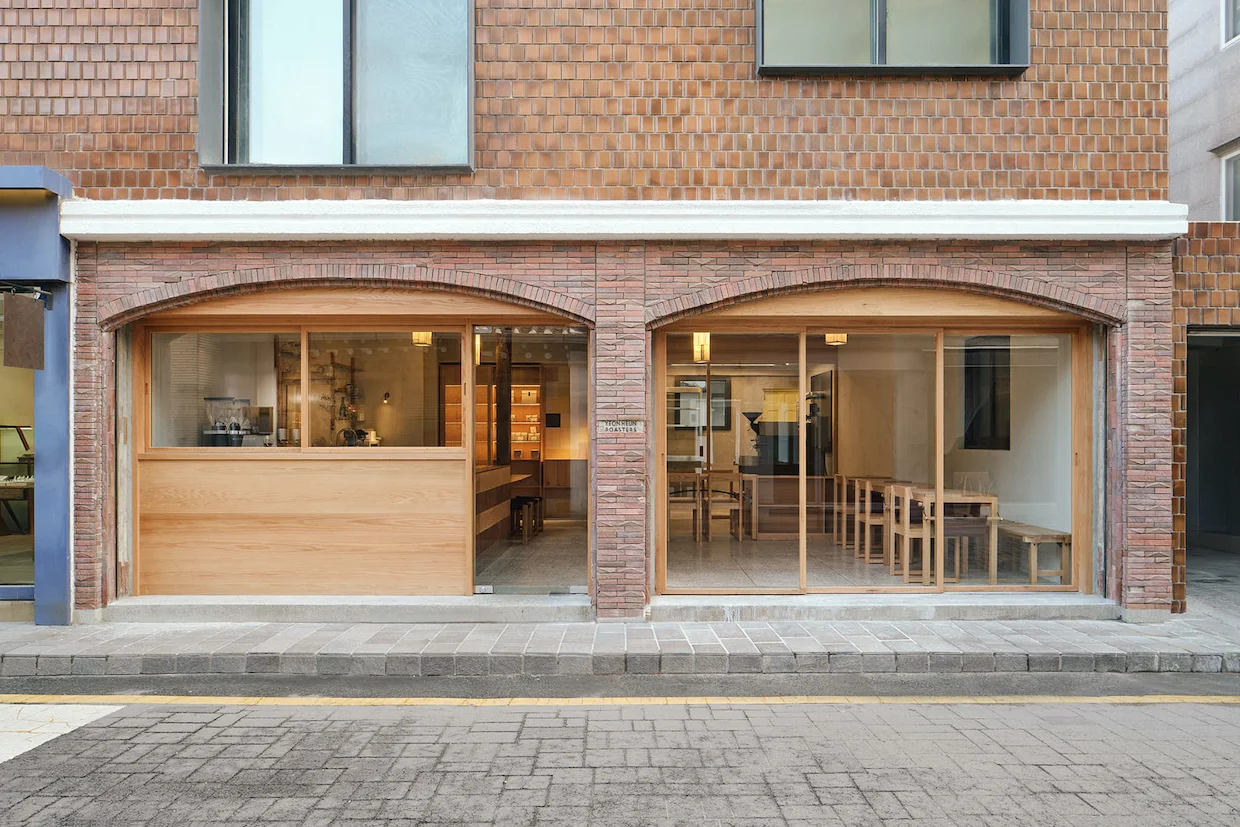
At Yeonheun Roasters, age is part of the interior’s material palette. The 60-square-meter cafe in Seoul’s Seochon district keeps evidence of the building’s past in view, using restored finishes and reclaimed wood to make the passage of time central to the space. That choice gives the renovation a clear premise: the building’s earlier life isn’t a problem to hide, but a resource that shapes how the cafe feels. It also sets a limit on the design’s ambitions, keeping attention on what was already present.
The effect depends on details that can be easy to miss in a small room. Old surfaces, reused elements and new furniture have to read as parts of the same composition, even when they come from different periods. Here, the designers connect them through recurring curves, grain and marks of use. The result feels considered without making every surface look newly made.
A renovation shaped by what was already there
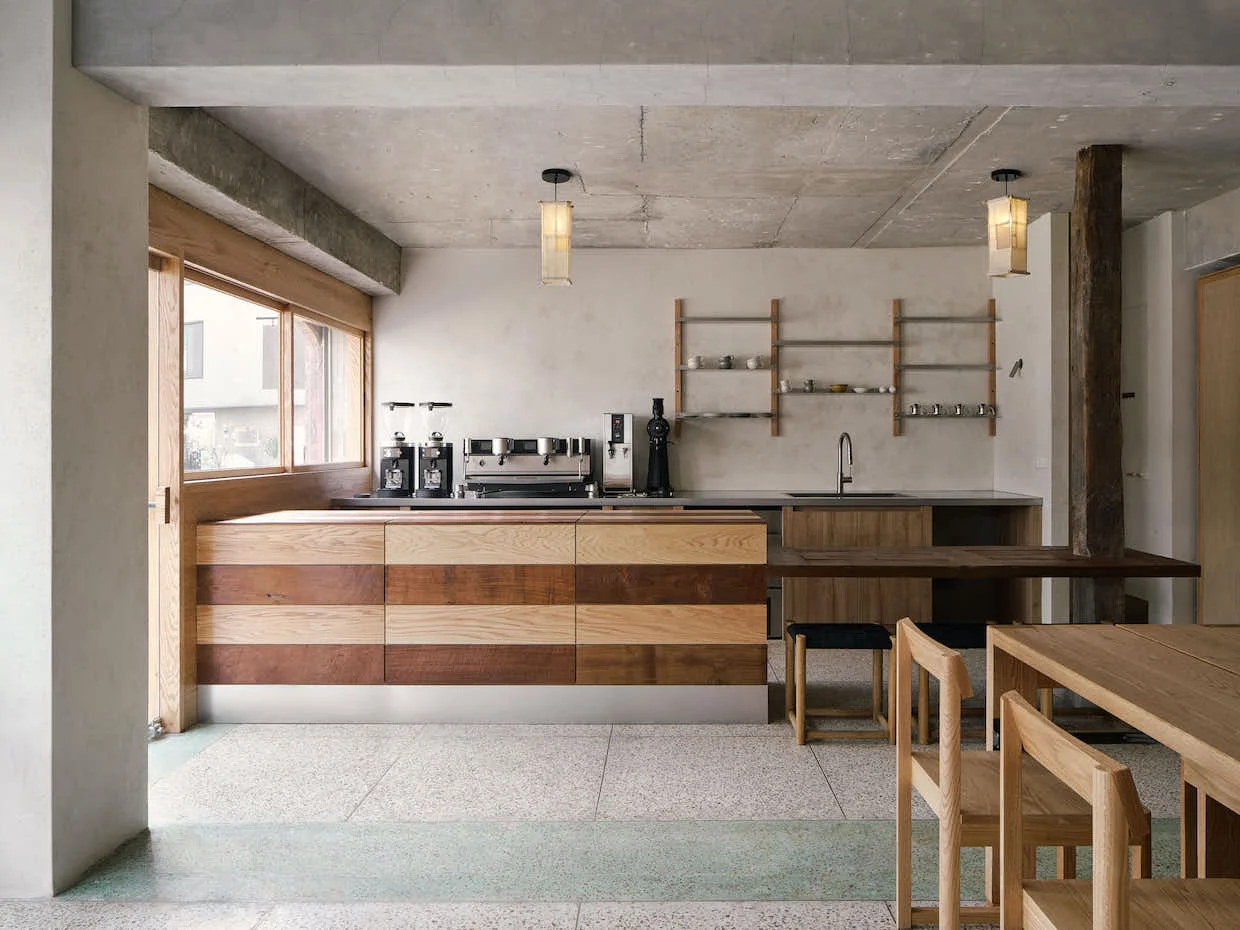
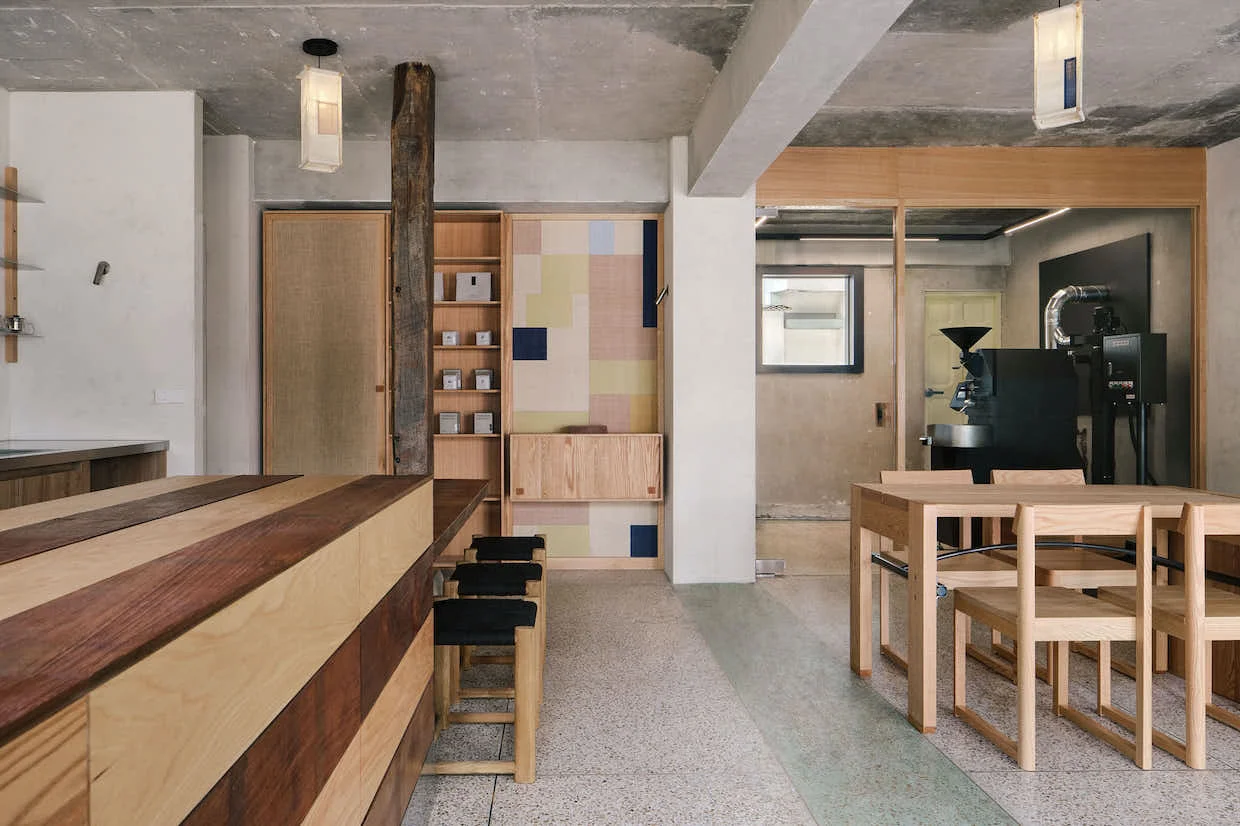
Designed by Seoul studio Sherpa, with Shin Yeon Ho and Mo Byeong Guk leading the team, the cafe was completed in February 2025. The designers restored the existing terrazzo floor and brought concealed windows and doors back into use, fitting them with new glass. Those decisions preserve the building’s physical character while adapting it for a cafe. Restoring an old floor, in particular, makes the existing structure part of the room’s everyday experience rather than a detail reserved for photographs.
The approach also reflects a broader challenge in small commercial renovations: a compact footprint leaves little room for gestures that don’t serve the whole. Keeping original features can add texture and continuity, but only if they work alongside the needs of a functioning space. Reopening concealed windows and doors gives dormant parts of the building a practical role again. The design’s restraint is its argument.
The building’s arched facade also shaped the interior: Sherpa carried its curves into furniture, linking new pieces to the architecture rather than treating them as separate decoration. The approach gives the compact cafe a coherent identity while allowing the old structure to remain legible. Repeating an architectural line in furniture can help a small interior feel unified, especially when the room has limited space for visual separation. It makes the new work answer to the building instead of competing with it.
Wood, grain and traces of use
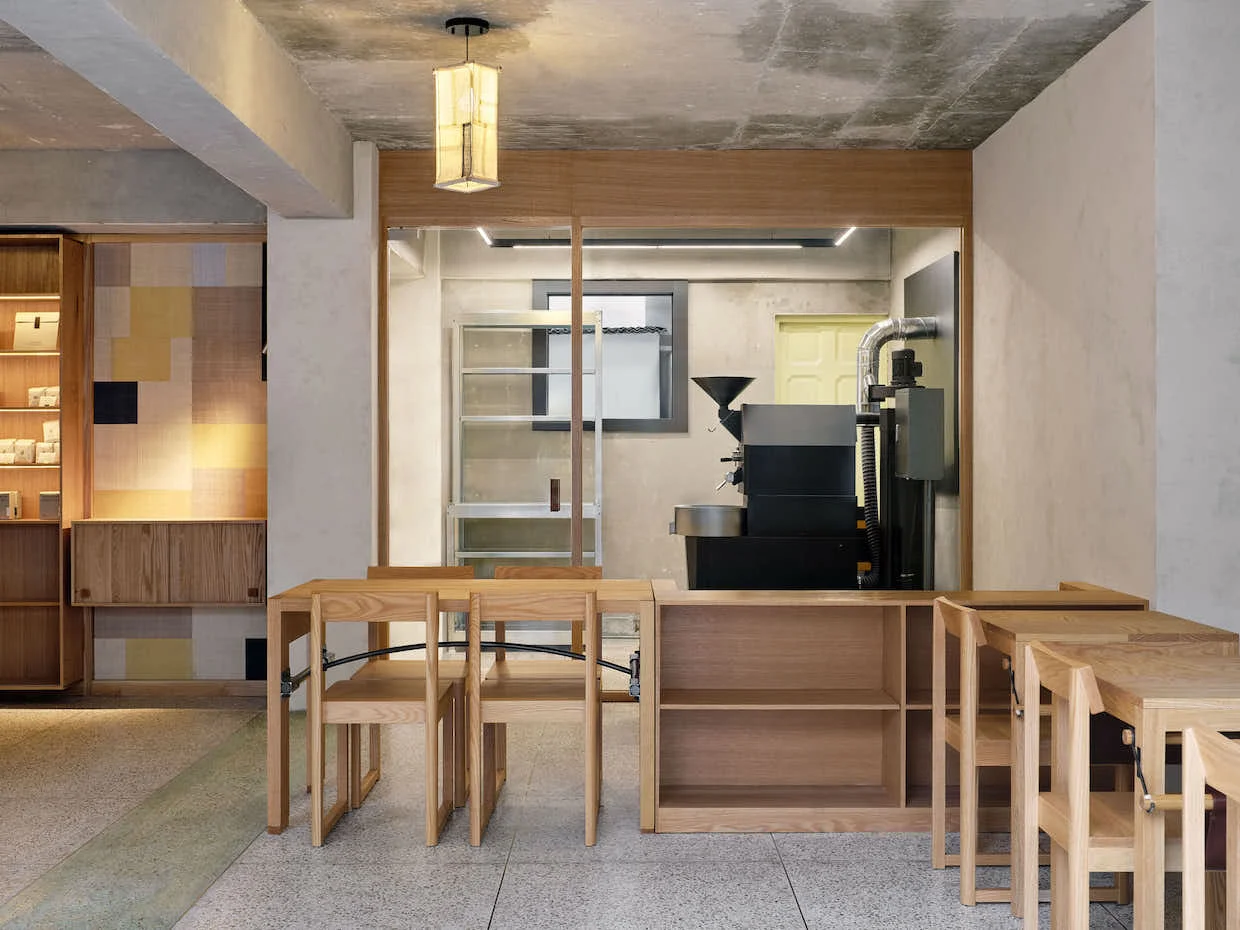
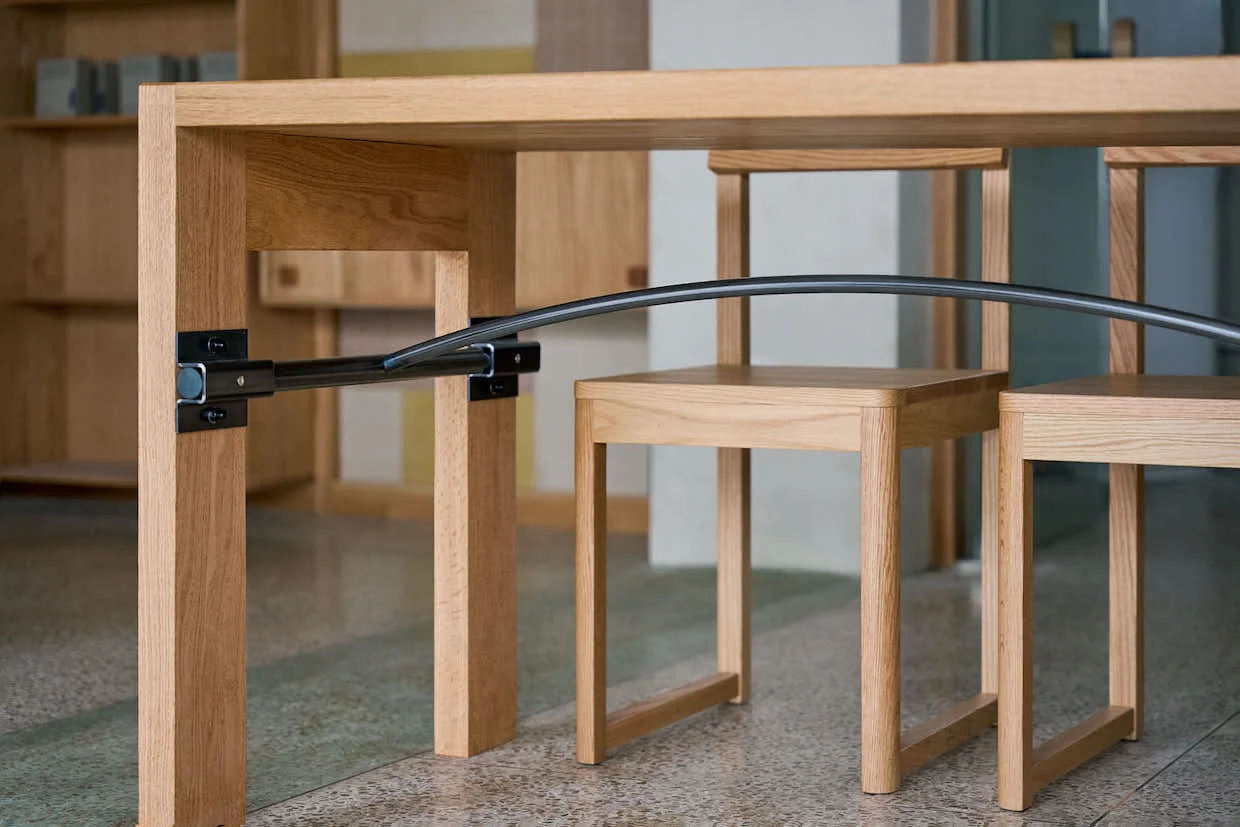
Reclaimed timber and oak extend the material story across the room. Growth rings and surface marks remain exposed, treated as records of time rather than flaws to conceal. Sherpa connected the patterns in wood grain with fingerprints and ripples, ideas that also informed the cafe’s graphic motifs. That connection brings the design’s central idea down to a human scale: grain is a natural pattern, while a fingerprint is an individual trace. Both suggest a history without spelling it out.
There’s a practical tension in this choice. Reused materials can bring variation and texture, but they also resist the uniform finish that many new interiors pursue. Yeonheun Roasters makes that variation visible and asks it to carry meaning. This is more significant than it looks: the concept depends on the surfaces feeling real, not simply aged for effect.
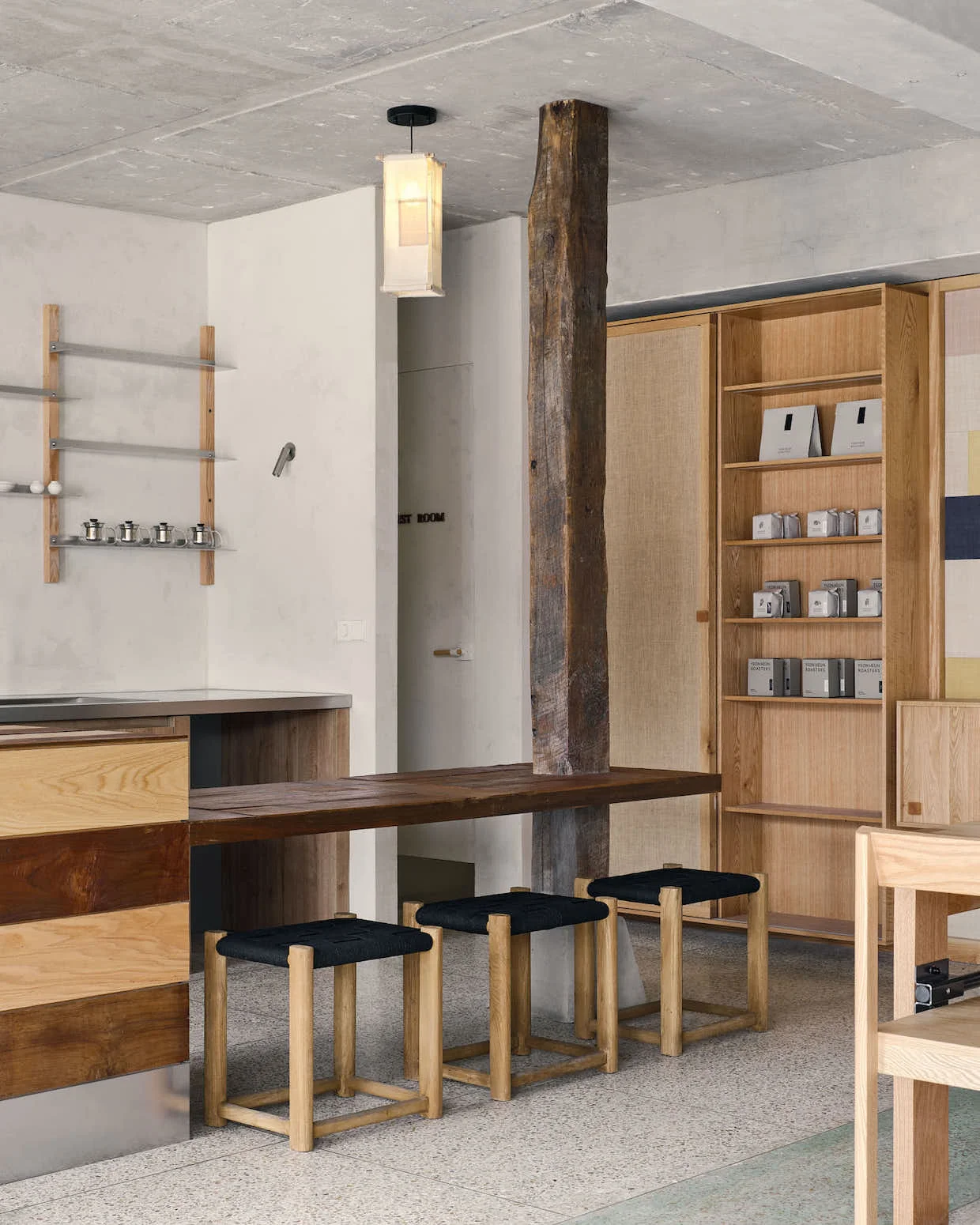
Some furniture uses nakdong-beop, a traditional wood-burning method. Charring the timber and finishing its cross-sections brings out a visual contrast between darkened surfaces and the grain underneath. The technique adds another register to the room’s material vocabulary: the marks aren’t only signs of wear but also the result of deliberate craft. Here, controlled alteration sits alongside restoration, giving the idea of time a designed expression.
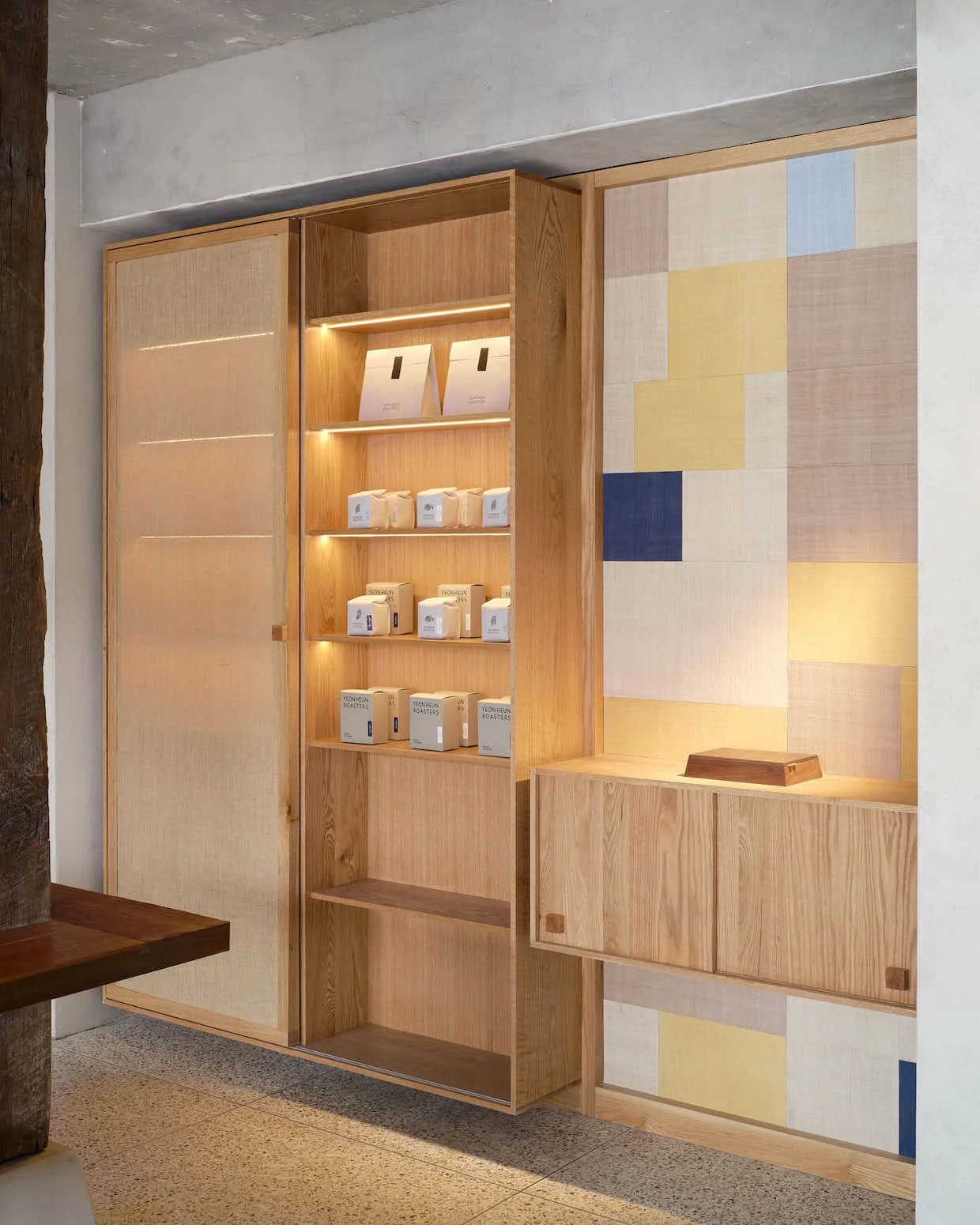
Reused timber columns stand on foundation stones, nodding to traditional Korean building practices. Wall pieces draw on jogakbo, the Korean patchwork tradition, while the ceiling lights carry the room’s warm material character overhead. These references work through their materials and forms, rather than relying on a single decorative symbol to announce a cultural identity. That subtlety matters in a cafe meant to feel connected to its neighborhood.
A neighborhood reception room
Sherpa’s concept draws on the idea that ripple marks are traces left by natural forces. The studio also cited travel writer Seol Jae-woo, who described Seochon as a place with “the power to soothe and heal our weary hearts.” The design translates that sense of refuge into a contemporary cafe. It’s an appealing ambition, though the feeling of refuge can’t be delivered by materials alone; it depends on how a place is used and received over time.
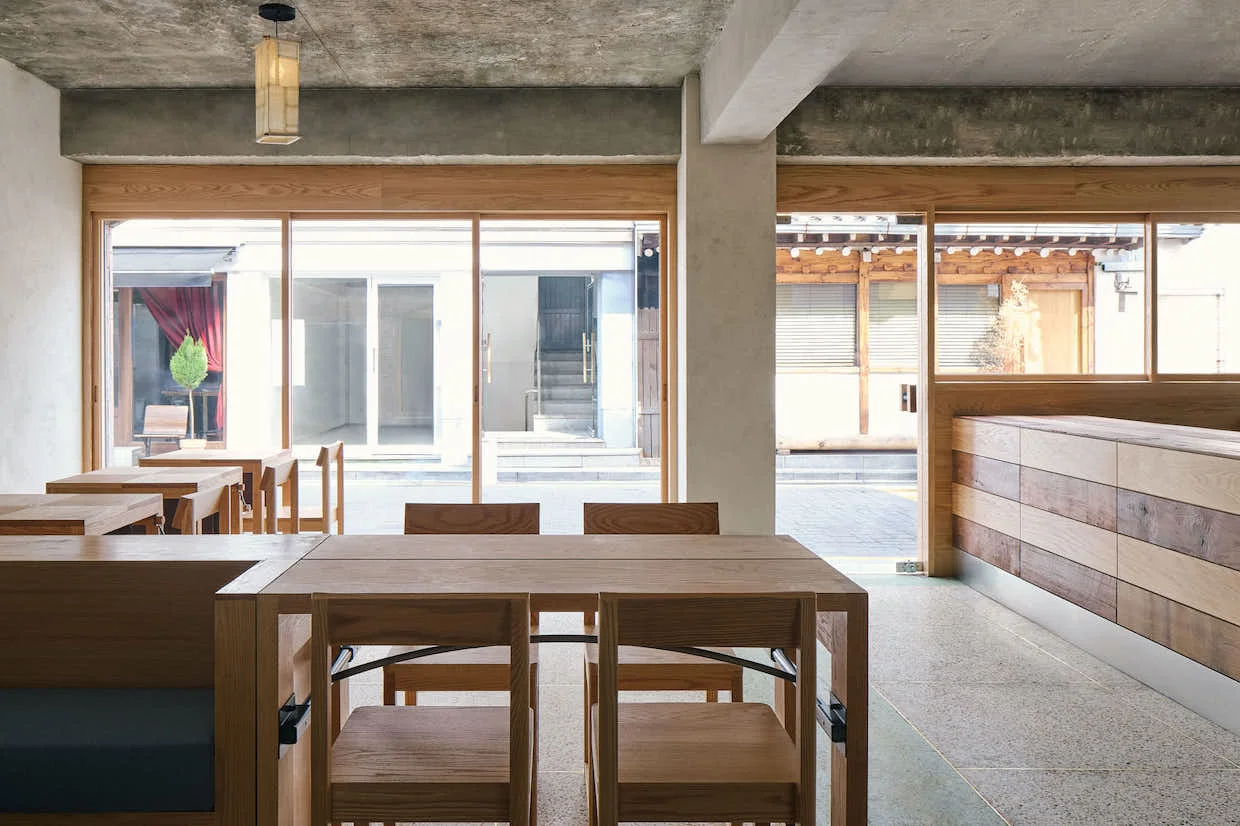
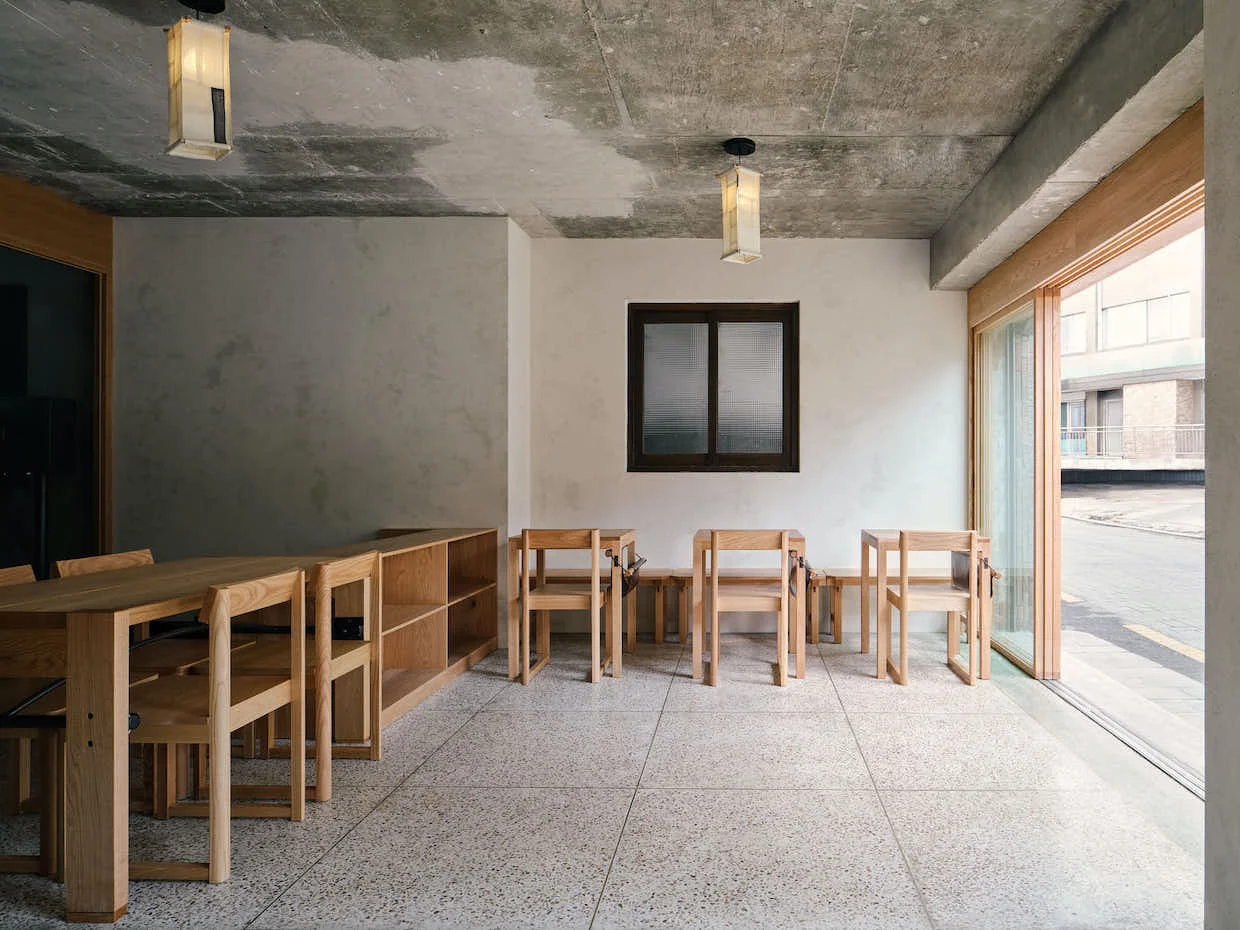
The result is framed as a neighborhood sarangbang, a traditional reception room: a place where local materials and small details make hospitality feel rooted in Seochon’s everyday rhythms. The design’s strongest gesture is its restraint—letting inherited surfaces and visible grain do the work of connecting the cafe to its setting. If you’re working in this space, the useful lesson is how a clear material idea can organize a room without turning every element into a statement.
What the design asks of a cafe
A cafe interior has to do more than communicate a concept. It has to accommodate people, support the ordinary rhythms of a visit and remain comfortable after the first impression fades. The source gives no account of how Yeonheun Roasters operates day to day, so its success as a neighborhood gathering place can’t be judged from the design description alone. The ambition is clear; the lived experience will supply the harder test.
And yet, the project offers a useful model for thinking about renovation. Preserving an old floor, reopening concealed elements and carrying the facade’s arches into furniture form a connected set of decisions. The materials reinforce one another, while the references to nakdong-beop, jogakbo and sarangbang give the interior a local frame. Not a replica of the past, but a contemporary room that lets traces of it remain visible.
That balance is the project’s most persuasive idea. A small cafe doesn’t need to explain every material or cultural reference to feel specific to its setting; it needs the details to belong together. At Yeonheun Roasters, the repeated motifs of grain, curves and ripples make that case. The judgment will ultimately rest with the people who use the room—and with whether its welcome lasts beyond the first visit.


Discussion
Sign in to join the discussion.