Unseenbird’s 225-square-meter Seoul cafe uses rotating comic-inspired partitions to adapt for pop-ups, signings and daily service.
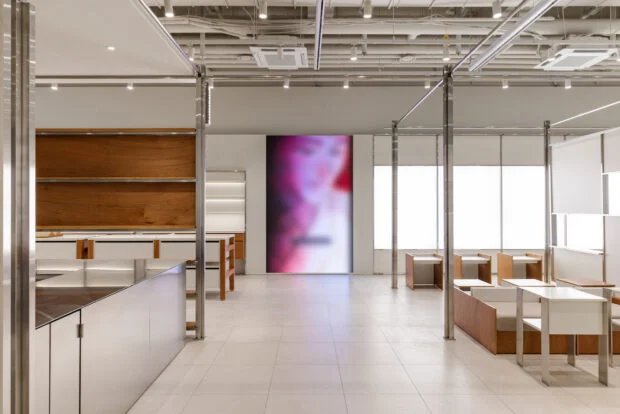
LEBOM Cafe’s interior is built to change with the stories it hosts. Rotating frames modeled on comic manuscript pages give the Seoul venue a flexible setting for pop-ups, artist signings and merchandise displays, while keeping the cafe functional between events. The idea treats the room as both a place to stop for a drink and a setting that can be redrawn around each program. That balance is the project’s main design test: promotional displays need to make an impression, but they can’t take over every part of the cafe.
Completed in April 2025 for Lezhin Entertainment, the 225-square-meter space was designed and built by Seoul studio Unseenbird. Bioh Seon led the architecture, with Yonghyeon Kim and Jieun Ko on the design team. The project’s scale makes flexibility a practical concern as well as a visual one; movable partitions can help a venue accommodate different activities without requiring a wholly different room for each. The source doesn’t describe the cafe’s operating schedule or the mechanics of its events, so the design’s day-to-day demands remain open questions.
A setting that can shift with each event
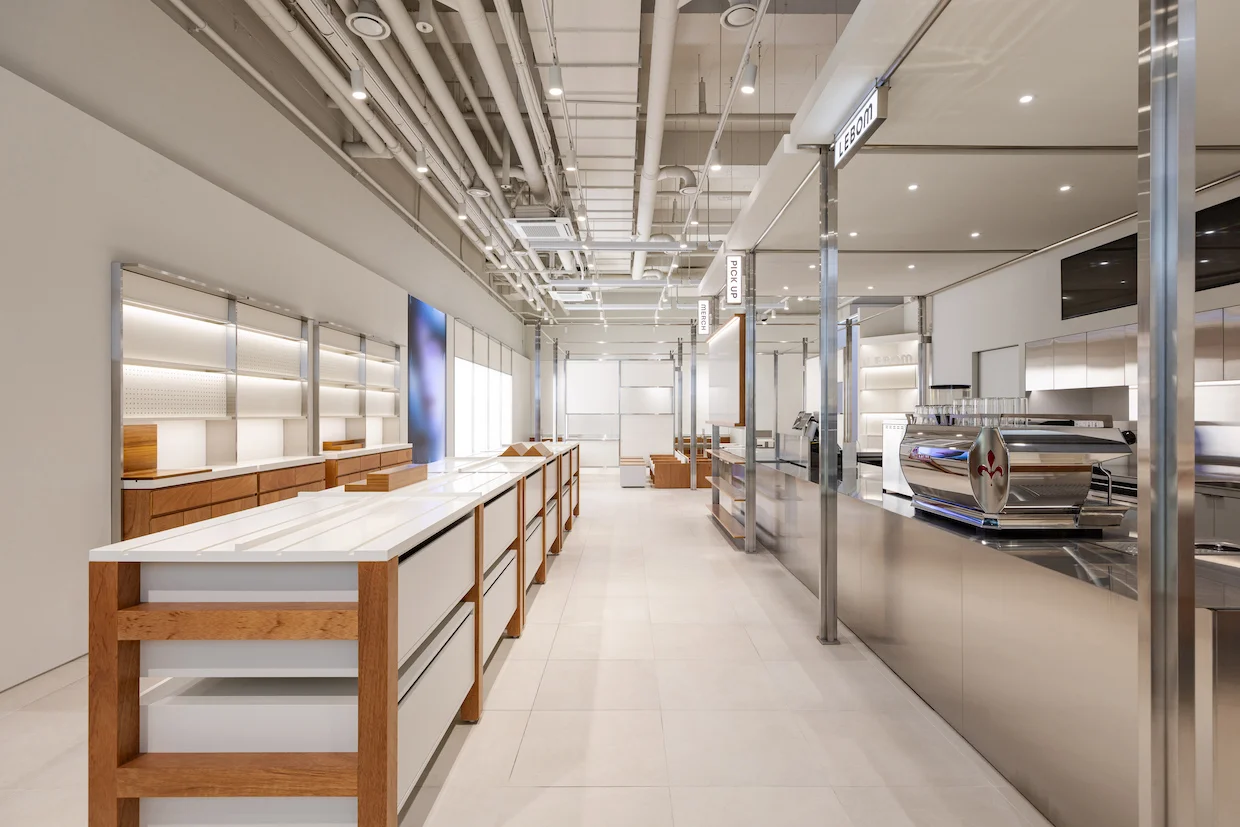
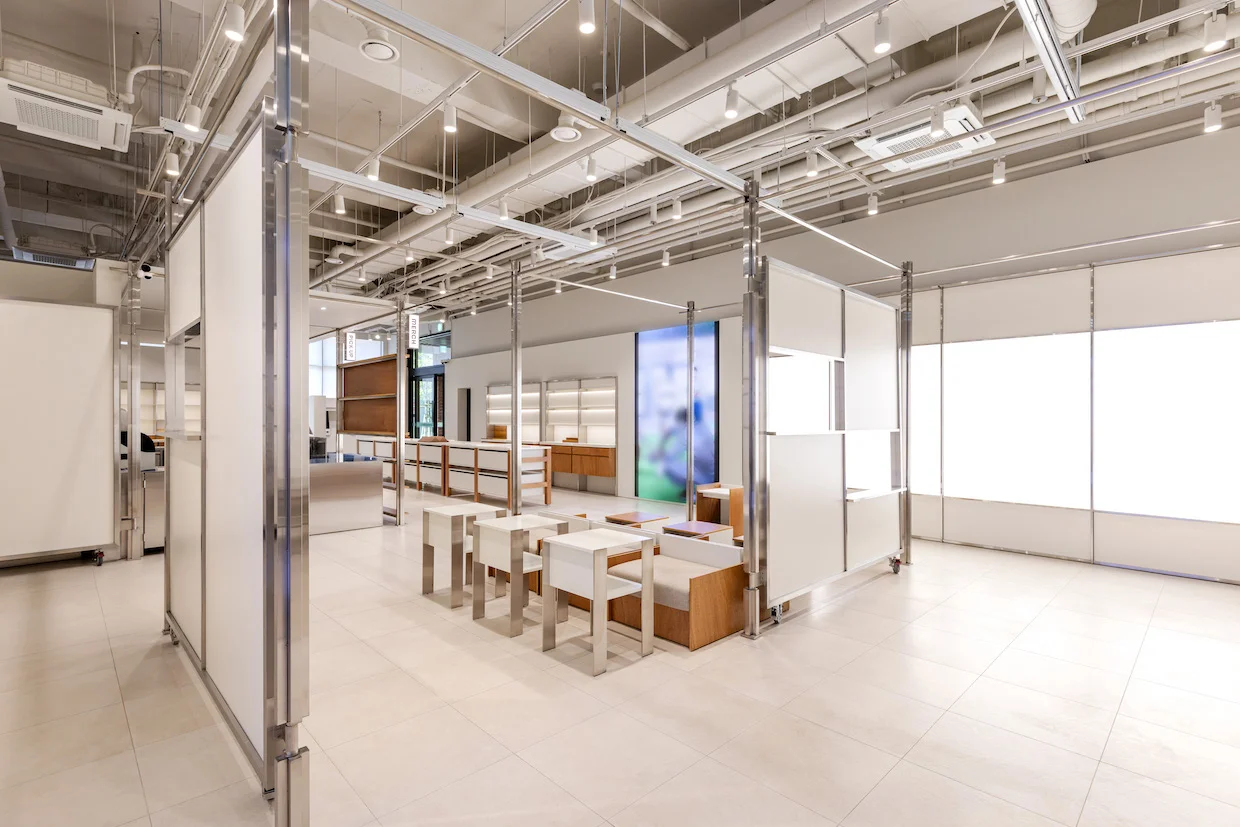
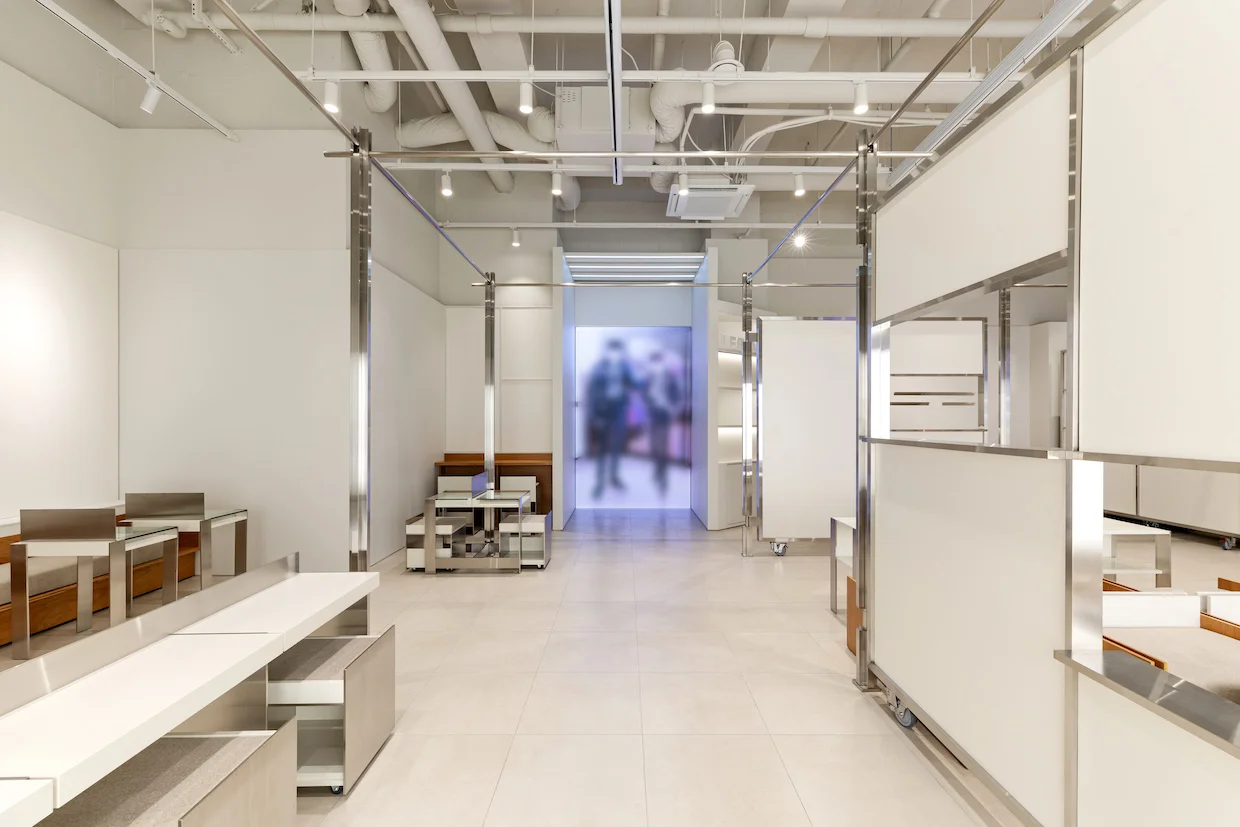
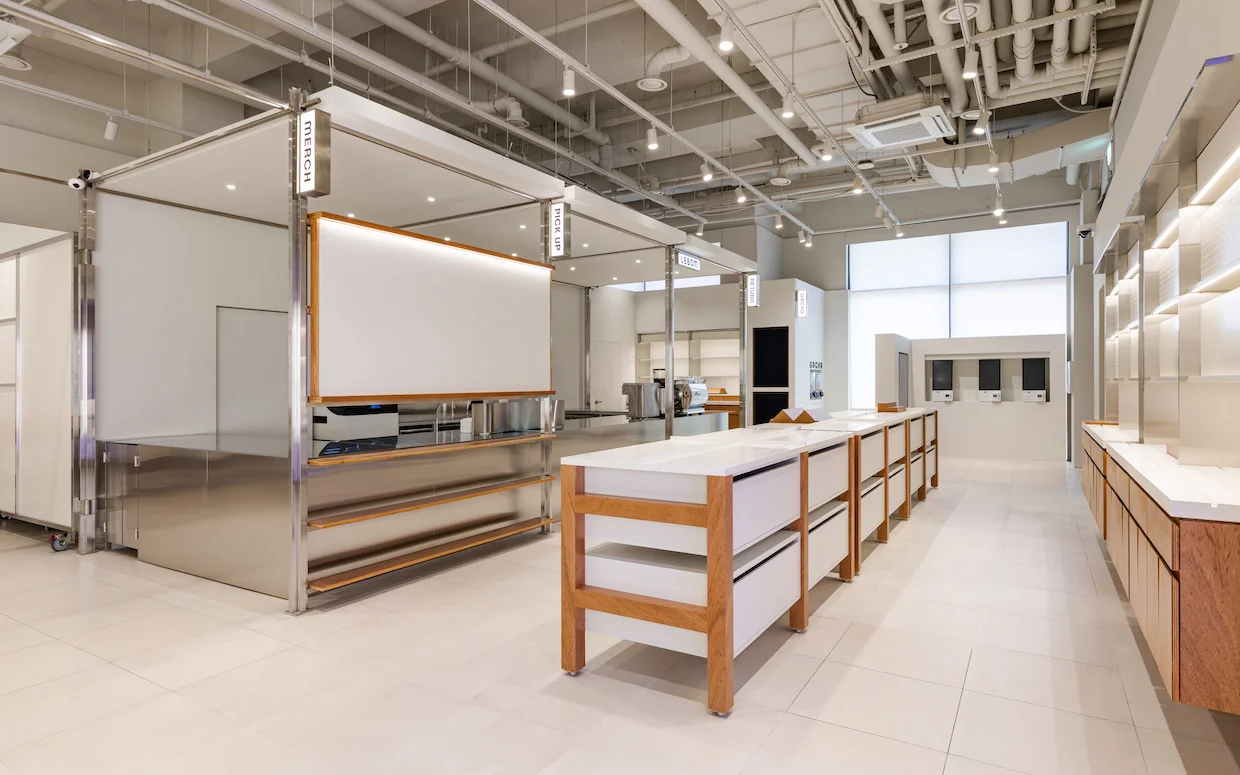
The design responds to a familiar challenge for branded venues: each new promotion brings its own imagery, but the permanent interior needs to work across all of them. At LEBOM, large movable structures divide the room and can be repositioned as the program changes. That gives the venue a way to adjust the arrangement while keeping the architectural framework in place. The distinction matters: a campaign can be visually prominent without requiring the cafe to rebuild its identity every time the featured work changes.
Openings in the frames connect comic artwork with views of the cafe beyond. Customers and illustrated characters appear in the same field of view, making the boundary between the fictional setting and the physical room part of the experience. The frames therefore do more than display images; they shape what visitors see through and around them. It’s a direct device, and its success depends on the artwork and the room remaining legible together rather than competing for attention.
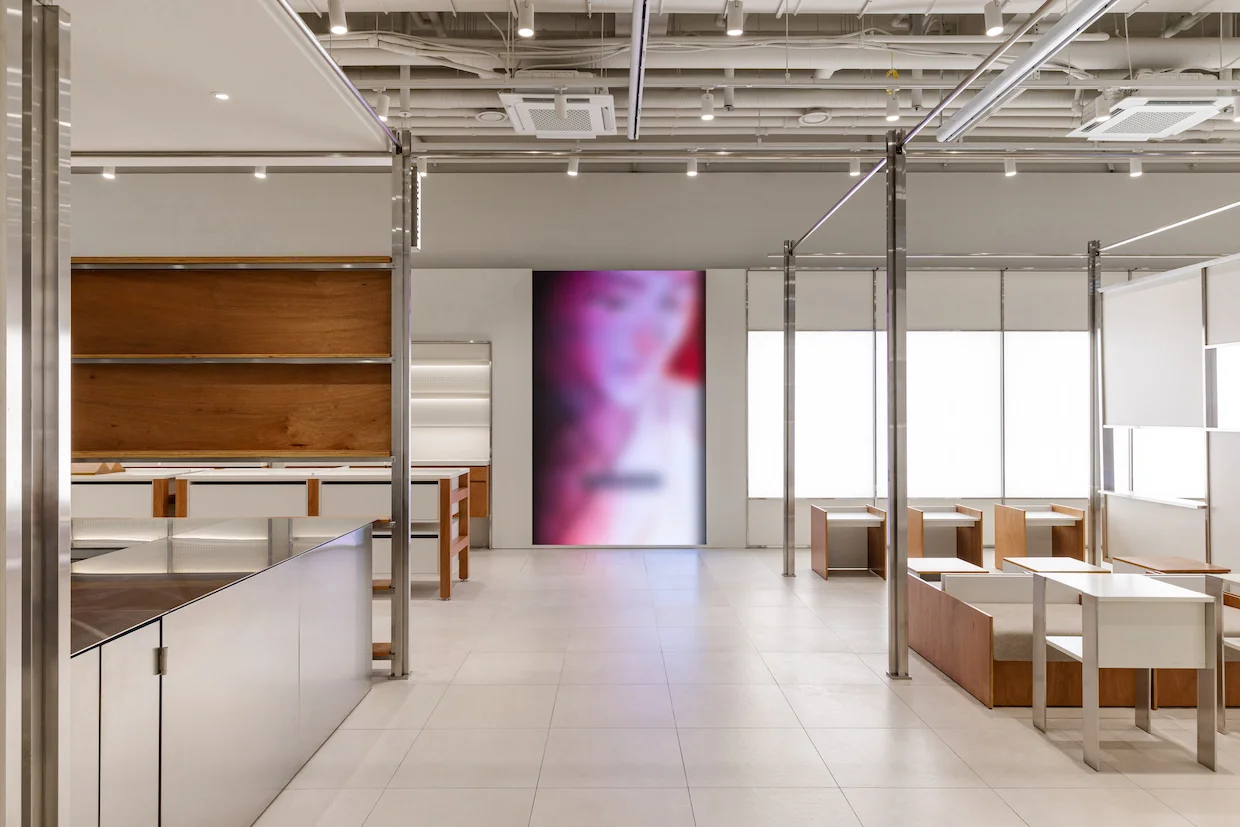
Unseenbird framed the project around how comics sit within everyday life as digital culture grows more present. The studio cited AI, avatar singers and augmented-reality games as examples of virtual experiences mixing with routine activities. Those examples point to a broader design question: how can a physical venue make a cultural interest feel present without turning every surface into a screen or advertisement? LEBOM’s answer, as described, is to bring comic imagery into the architecture itself and let the room’s arrangement change around it.
“How do people who like comics perceive comics in their daily lives?” the studio asked in its project description. “How far have they brought the subject into my reality? It is clear that they are keeping it much closer than just paper or screens.” The question gives the interior a conceptual frame, but the built work is where that idea has to become usable. The movable panels connect the studio’s reflection on comics and daily life to a concrete feature of the cafe.
A neutral framework for changing visuals
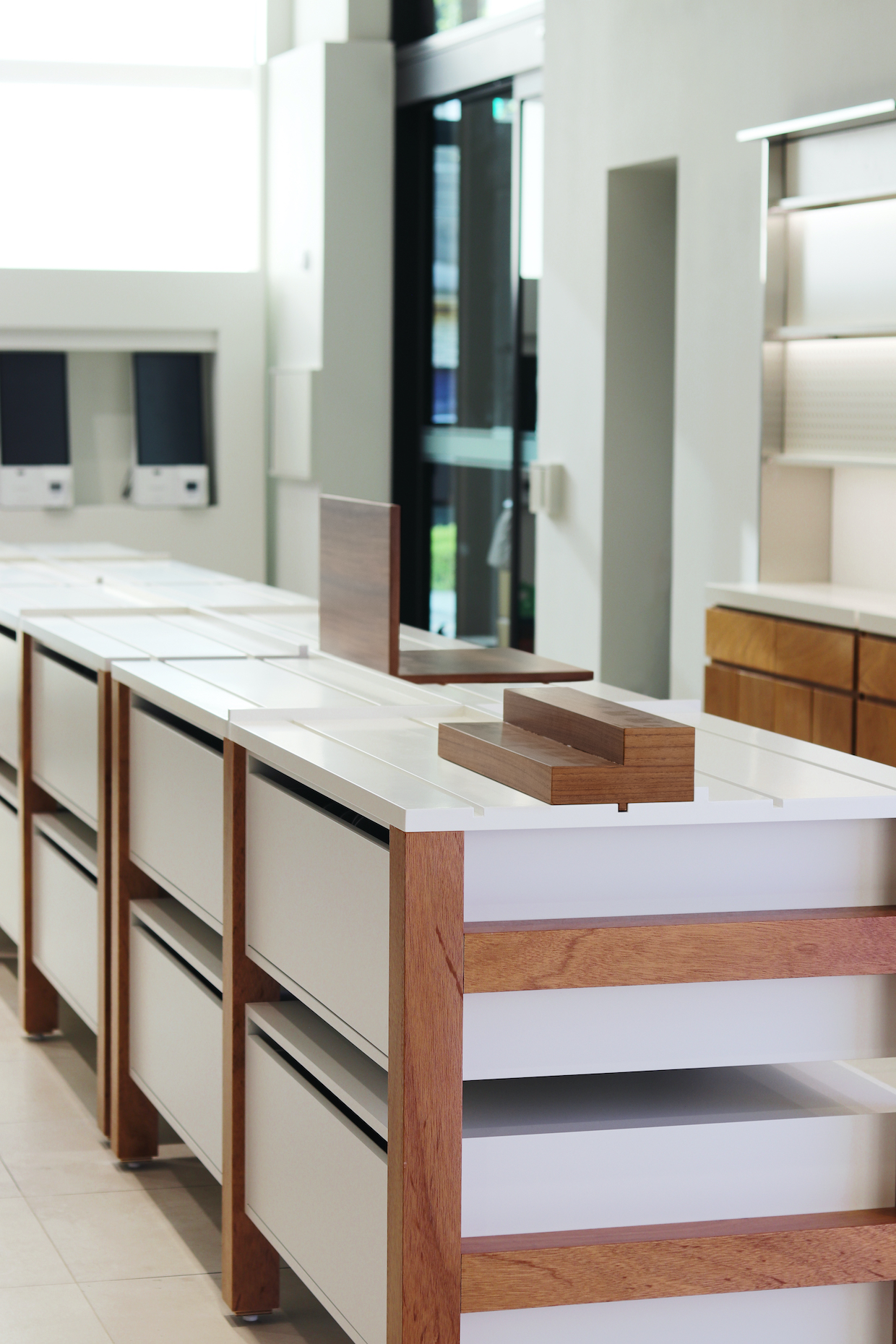
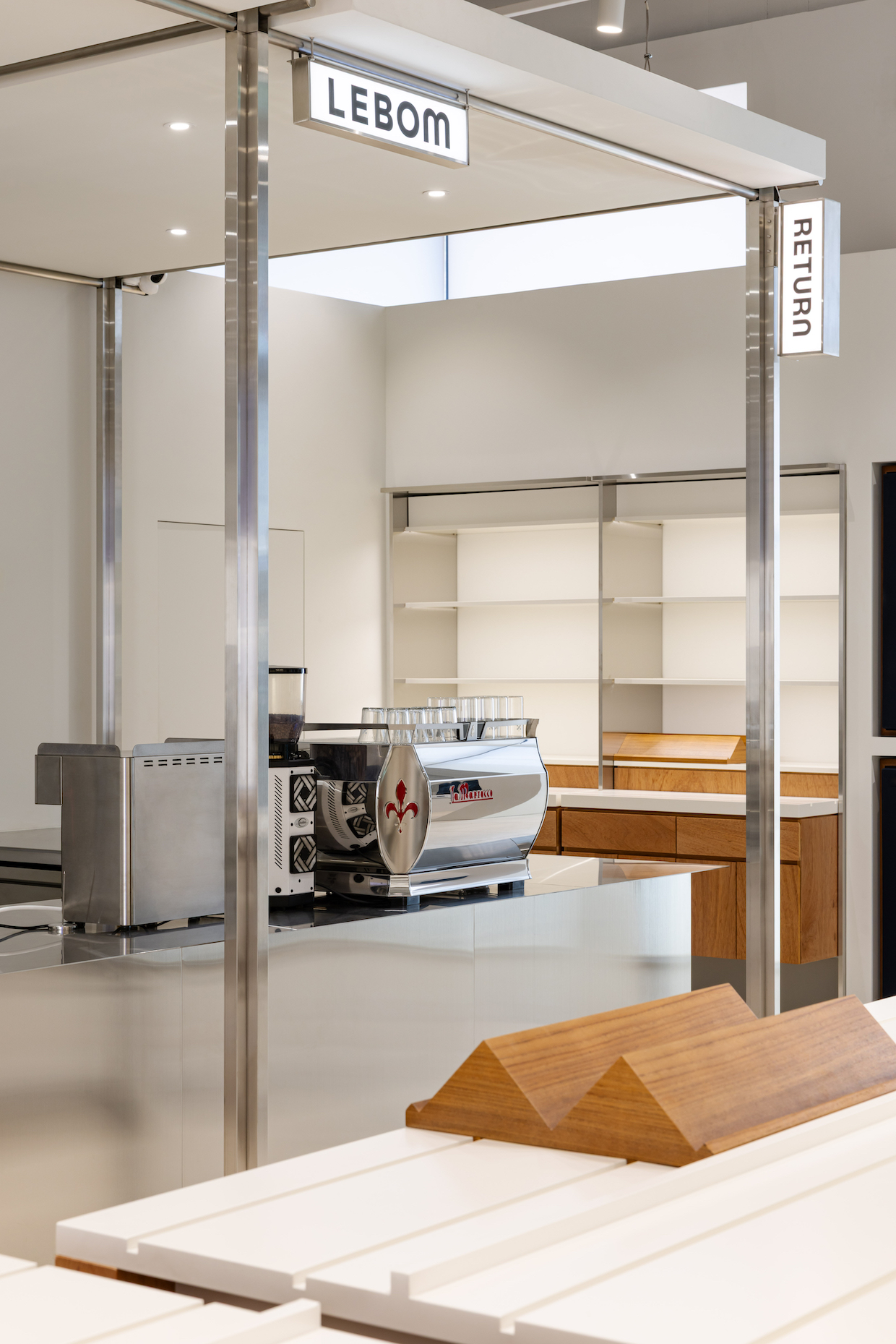
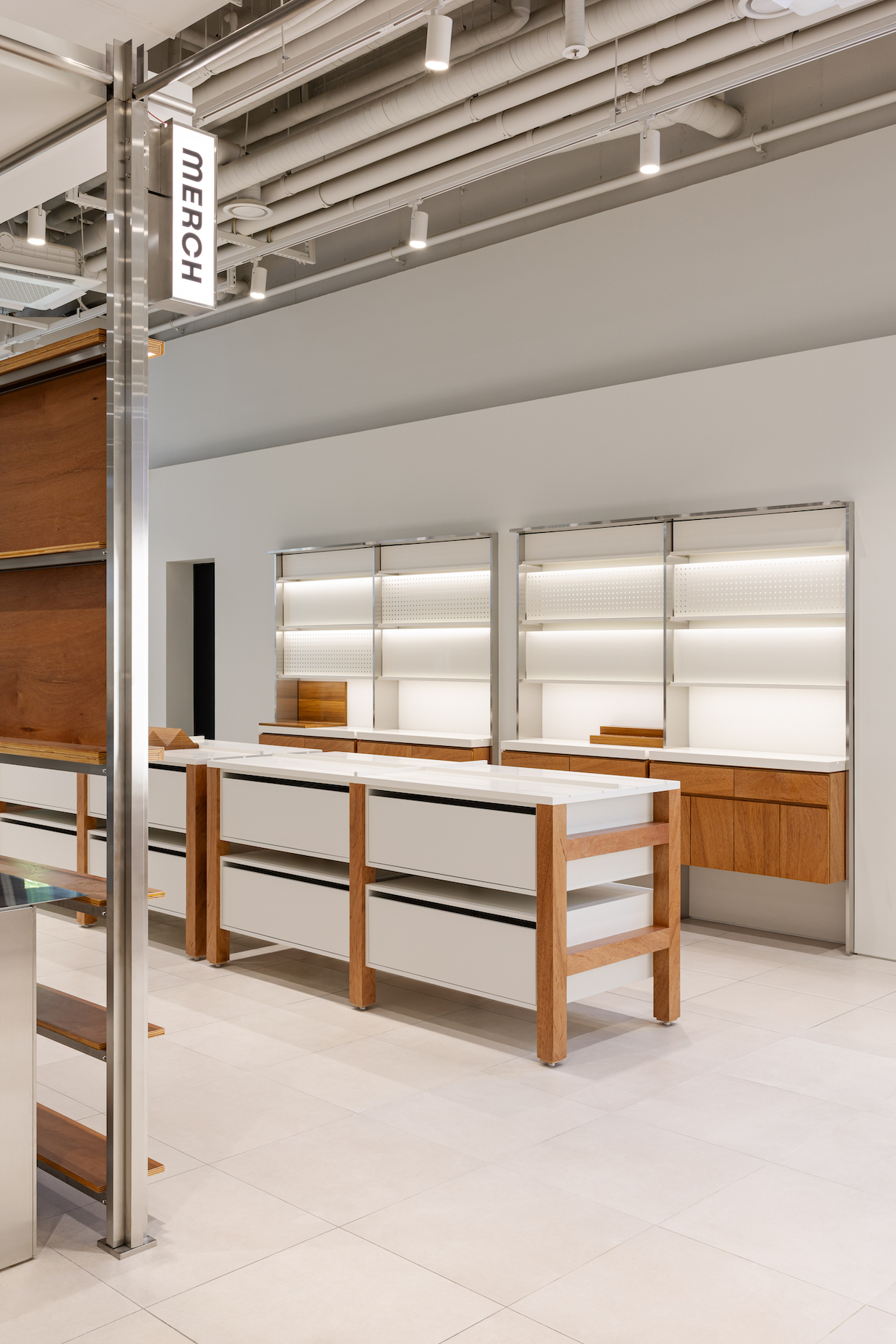
Cross-shaped columns and overhead supports provide places for interchangeable signs and banners. Painted surfaces, wood and stainless steel keep the base palette restrained: wood brings warmth, while neutral finishes leave room for each featured comic to set the tone. This is a useful division of labor. The permanent materials establish the room, while the changeable graphics carry the identity of a particular event.
That approach gives the cafe a stable architectural identity without locking it to a single campaign. As Unseenbird put it, “The entire space becomes comic manuscript paper, and here, characters and reality are mixed.” The manuscript-page reference is more than a decorative motif: it suggests a framework that can receive new content. The numbers here are underwhelming in one sense: the project description explains the design intent, but doesn’t say how often the frames move or how well the arrangement works during busy service. Still, the idea of making change part of the permanent plan is more significant than it looks.
What flexibility means for the cafe
For a venue that hosts changing programs, adaptable fixtures can reduce the tension between a branded event and everyday use. Similar systems typically work best when staff can alter displays without disrupting the core functions of the room; the project description doesn’t detail how that process works at LEBOM. (And this is the part most people overlook.) A movable partition still needs a practical home and a clear role when it’s not being repositioned.
If you’re working in this space, LEBOM offers a clear design proposition: make the recurring change visible, then give it a steady architectural frame. That said, flexibility alone doesn’t guarantee a good visitor experience. The arrangement has to preserve circulation, keep the cafe usable and let each featured work read clearly. The source describes the design strategy, but offers no assessment of those operational results.
LEBOM’s design makes flexibility part of the permanent interior. The rotating partitions and adaptable graphics let the venue host changing comic programs while preserving a consistent space for everyday cafe operations. A framework for the next story.


Discussion
Sign in to join the discussion.