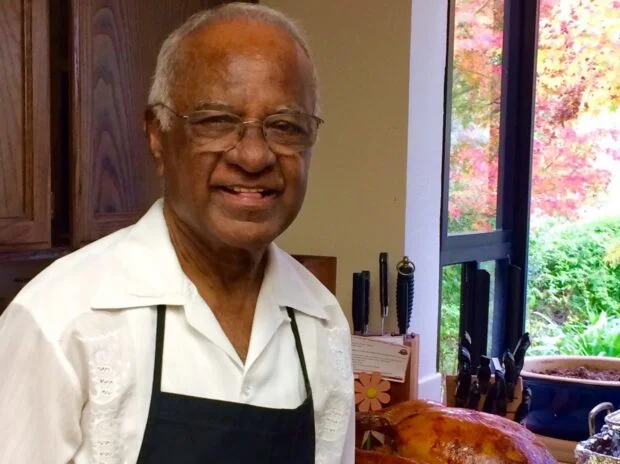
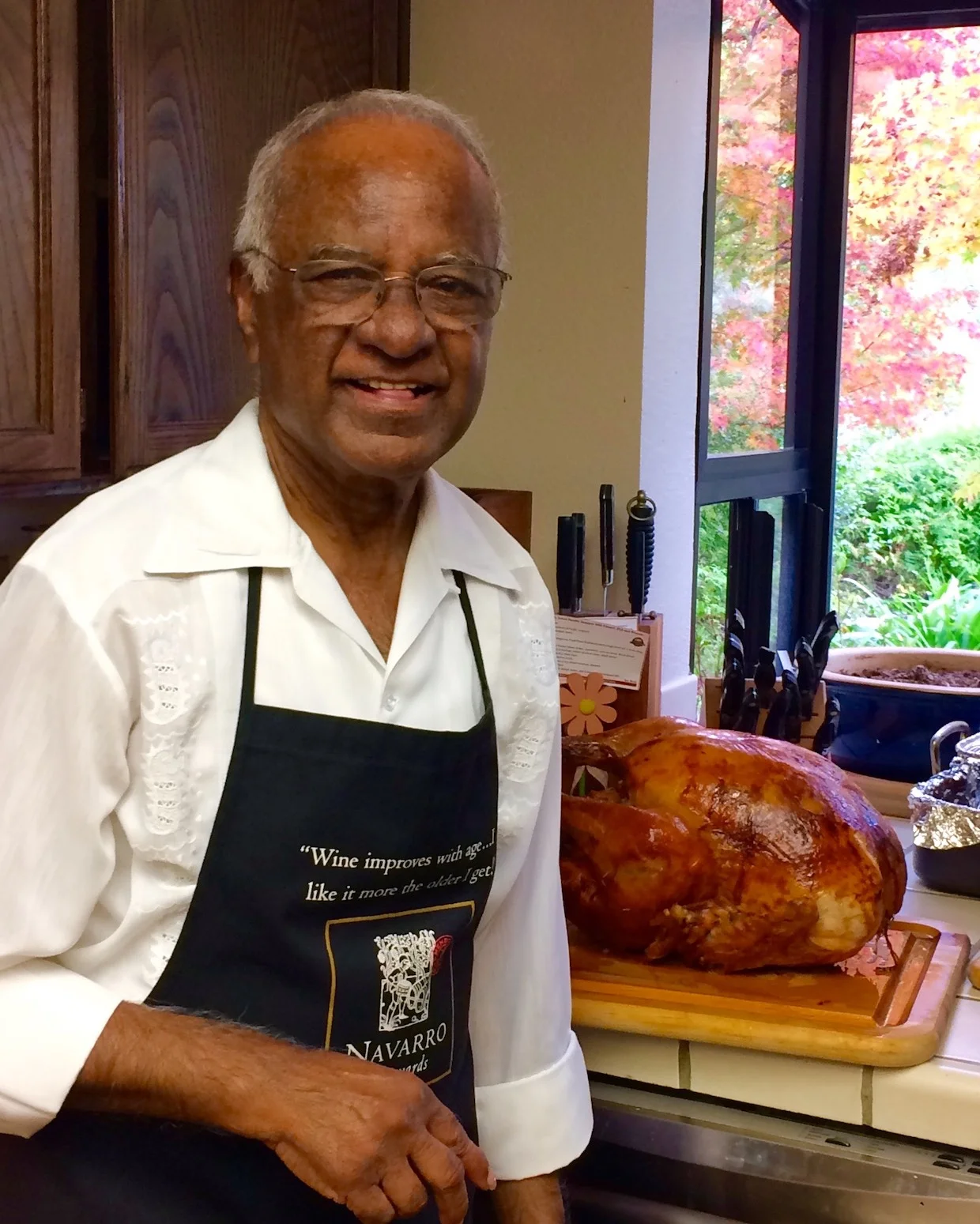
Dr. Joseph John. Photo courtesy of the John family.
Dr. Joseph John, a former nuclear physicist who helped introduce and redefine Indian-grown coffee in the United States, died Sept. 15. He was 88.
Known throughout the industry simply as “Dr. John,” John and his wife, Urmila, established the San Francisco Bay Area-based Josuma Coffee Company in 1992, working to introduce high-quality Indian coffees to a U.S. specialty coffee market that largely overlooked the origin.
John later developed the company’s signature Malabar Gold Espresso blend, made exclusively with Indian coffees, while becoming a fixture at industry trade shows through his lectures on the science of espresso.
Born in 1938 in Madurai, in India’s southern state of Tamil Nadu, John earned bachelor’s and master’s degrees in physics before joining India’s atomic energy program in 1958, at age 20.
He moved to the United States in 1964 and earned a doctorate in nuclear physics from Florida State University in 1968. He met Urmila at Florida State, and the couple married in 1967 and became parents in 1972.
John subsequently worked for Gulf General Atomic, a predecessor of today’s General Atomics, in San Diego before moving into business and consulting work in the San Francisco Bay Area.
Entering Coffee
John’s entry into specialty coffee came unexpectedly after an acquaintance connected to an Indian coffee estate sought help finding American buyers. In a 2012 interview with Fresh Cup magazine, John recalled that he and Urmila initially had no plans to enter the coffee business.
“It was not by design. It was really just sheer accident,” he said.
The couple officially established Josuma Coffee Company in 1992, focusing on direct relationships with Indian estates, specializing in coffees that could meet the quality requirements of specialty roasters. John also worked with growers and the Coffee Board of India to improve quality and expand the country’s presence in the U.S. market.
In a 2018 account of Indian coffee’s development, Barrington Coffee Roasting Company co-founder Barth Anderson credited John with introducing him to Indian specialty coffee in 1996, describing his influence on both American roasters and coffee producers in India.
In 1996, John developed Malabar Gold Espresso, initially as a demonstration of the potential of Indian beans in premium espresso blends. The product grew into Josuma’s flagship roasted coffee offering.
John also became an outspoken advocate for the use of high-quality robusta in espresso blends, challenging prevailing attitudes in the American specialty coffee industry.
An Educational Leader
Beginning in the early 2000s, he wrote extensively about espresso extraction and blending while delivering lectures at Coffee Fest and other industry events. His classes included “Espresso and Coffee: More Different Than You Think.”
His published work included a two-part 2008 article on espresso blending in Roast magazine and the 2023 book Creating a Perfect Espresso, which brought together much of his teaching and writing.
John retired in 2017, although his involvement in coffee education continued. In 2018, Josuma became an early supporter of the UC Davis Coffee Center, where a conference room now bears the company’s name.
Josuma remains family-owned and operated under the management of John’s son, Melind, and daughter-in-law, Steph.
John is survived by his wife, Urmila, Melind and Steph.
Comments? Questions? News to share? Contact DCN’s editors here. For all the latest coffee industry news, subscribe to the DCN newsletter.
Related Posts

Discussion
Sign in to join the discussion.