Pastime Coffee opens a new 1,000-square-foot production roastery in Portland, enhancing efficiency while maintaining strong community ties.
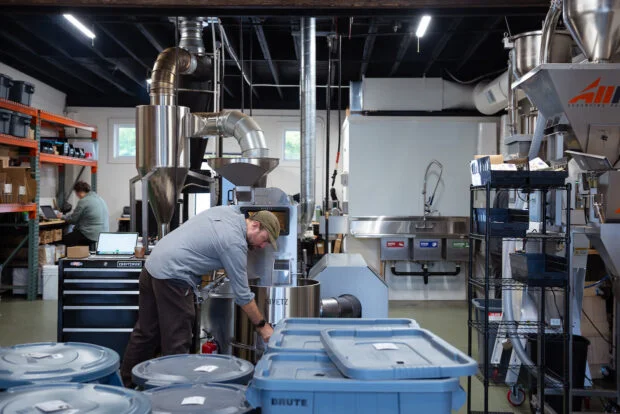
Pastime Coffee is ramping up its operations with a new 1,000-square-foot roastery in a former flower shop located in Northeast Portland, Oregon. This move marks a significant step towards professional production for the brand, which has quickly gained traction since its inception. The use of a transformed space highlights not just the brand's growth, but a trend in the coffee industry where companies are adapting existing structures to meet their needs. This is part of a broader shift toward sustainable business practices, especially significant in urban areas where finding space can be challenging.
New Roastery Features
Central to the new roastery's operations is a 15-kilogram-capacity Sivetz SRM-15 fluid-bed roaster. This roaster's design is well-regarded for its ability to produce a clean cup of coffee, which is central to Pastime's mission of quality. Accompanying this, a VortX EcoFilter utilizes atomized water for exhaust treatment instead of a gas-powered afterburner. This choice indicates a forward-thinking approach to environmental responsibilities—an increasingly pressing issue in coffee production. An accommodating set-up allows a forklift to bring in green coffee directly, highlighting the practical design of the production space and ensuring operational efficiency. This kind of forethought could very well serve as a model for new entrants into the coffee industry who may be overlooking the logistics of their operations.
Justin Dedini's Vision
Justin Dedini, founder of Pastime Coffee, explained the rationale behind the roastery's size: "Everyone likes to overestimate how much space they need, but this can hinder daily operational efficiency. We aimed for the smallest space that meets our efficiency requirements while providing the necessary tools and stock." His previous experience roasting for esteemed Portland companies like Heart Coffee and Roseline Coffee has markedly influenced this approach. Dedini's focus strikes at the heart of an important conversation in commercial coffee roasting: bigger doesn’t always mean better. This insight into efficiency is a lesson that fledgling companies often overlook, instead seeking larger setups that can lead to increased costs with minimal returns.
Prior to launching Pastime, Dedini was well acquainted with the collaborative ethos at the Buckman Coffee Factory. This shared roasting space not only refined his skills but also fostered community engagement. Although he misses the collaborative environment of Buckman, the growth of Pastime necessitated its transition into an independent facility. This sentiment highlights the often bittersweet nature of scaling up: while independence can lead to greater creative freedom, it can also mean isolation from community collaboration that smaller setups thrive on.
Building a Team and Community
To bolster operations, Dedini brought on Erica Schwager, a former colleague from Roseline Coffee, just over a year after founding Pastime. With a background in management at Gimme! Coffee and training roles at various local cafes, Schwager manages production roasting and wholesale sales. Currently, she also oversees Thatcher’s Coffee in Vancouver, Washington, which Pastime acquired in 2025 without compromising its established community vibe. By blending the strengths of her experience with Pastime’s vision, Schwager represents a strategic investment in human resources that could pay off in the long run.
"It’s not going to be a Pastime cafe. Thatcher’s has its own unique community and atmosphere that we intend to preserve," Dedini affirmed. This declared intent underlines Pastime's commitment to safeguarding the local culture while expanding its brand. Such a strategy doesn’t just retain clientele; it respects the communities that have supported these businesses. (And this is the part most people overlook.) Retaining the essence of a brand through community connection can be a remarkably effective marketing strategy, one that often pays dividends in loyalty over time.
Sustainable Sourcing Practices
The company prioritizes building long-term relationships with producers to ensure price stability while sourcing directly from them. "We aim to partner with communities and individual producers to maintain consistent pricing and bulk purchasing, which benefits both sides," Dedini remarked. This approach goes beyond the transactional; it's about fostering a sustainable ecosystem that can withstand market fluctuations. By establishing these relationships, Pastime hopes to elevate its role within the coffee supply chain, making it a reliable option for both consumers and producers.
To achieve this, Pastime collaborates with importers such as Shared Source, Atlantic Specialty Coffee, and ICT Coffee for both logistics and sourcing support, facilitating direct selections of coffees. This not only streamlines their supply chain but also ensures the quality of the beans, which ultimately influences the final product’s flavor profile. In a market saturated with choices, maintaining this quality can set Pastime apart from its competitors.
Future Engagement Plans
In the future, the new roastery plans to host cuppings by appointment and may introduce a limited-hours pop-up coffee cart in the building's open garage bay, further engaging the local community. These strategies indicate a forward-thinking mindset that goes beyond simple production; they aim to create touchpoints for consumer interaction and education. However, Dedini and Schwager's primary focus remains solidly on enhancing the roasting business, which is wise. Given the fierce competition in the coffee market, maintaining a clear mission will be essential for sustaining growth.
"The goal with our production space is straightforward: to serve our wholesale and retail partners more effectively and with greater consistency," Dedini clarified. "We want to maintain our quality and continue improving our operations." This ambition underscores Pastime Coffee’s trajectory. If you're working in this space, you'll recognize that many companies falter by spreading themselves too thin. The committed focus on operational excellence may serve as a stabilization point for growth, supporting both their wholesale partners and the broader community.
Implications and Outlook
As Pastime Coffee's operations evolve, the implications for the wider coffee industry are significant. Their emphasis on sustainability, community engagement, and operational efficiency contrasts with many larger brands that often prioritize scale over quality. This may inspire other smaller roasters to adopt similar strategies, encouraging a collective pivot towards responsible sourcing and community-driven ethos. The outlook for Pastime seems bright, but it won’t come without challenges; navigating growth while maintaining those values will be key. Ultimately, the path they carve out may redefine what it looks like to be a successful coffee brand in an increasingly competitive market.
Have thoughts or inquiries? Reach out to our editors through the contact page. For ongoing updates from the coffee industry, subscribe to our newsletter.

Discussion
Sign in to join the discussion.