The IWCA marks its 23rd anniversary with a refreshed logo, enhancing its global mission to empower women in the coffee industry through over 40 chapters worldwide.
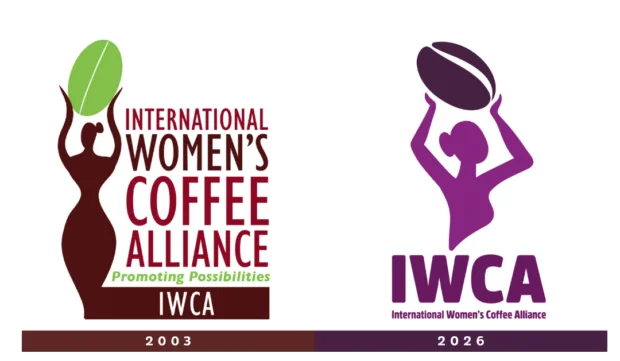
IWCA Unveils New Logo to Celebrate Milestone
The International Women’s Coffee Alliance (IWCA) has launched a refreshed logo, coinciding with its 23rd anniversary. This strategic rebranding not only marks a milestone for the organization but also reflects its strengthening global presence, now comprising over 40 independent chapters dedicated to empowering women within the coffee industry. The redesigned identity emphasizes a new color palette centered around purple, symbolizing ambition and creativity, and features a striking depiction of a woman cradling a coffee bean aloft. This rebranding comes after the organization expanded its chapter network earlier this year, showcasing its ongoing commitment to support women in coffee production and trade.
The significance of this redesign extends beyond aesthetics. It signals a maturity for the organization that has grown substantially since its inception. As IWCA amplifies its voice in a male-dominated industry, the new logo serves as a visual anchor for its mission of advocacy and empowerment. In many instances, branding can often reflect deeper cultural and organizational transformations, and in this case, it's a clear statement that the IWCA aims to better represent the women who fuel this global commodity.
For more on the new look and its implications, visit their official blog here.
Nestlé Extends Investment Footprint in Mexico
In a significant boost to its operations, Nestlé has announced an additional $1 billion investment in Mexico, extending its total financial commitments in the region to $2 billion for the 2025-2030 period. This investment underscores the company's dedication to developing a sustainable coffee supply chain in Mexico. They’ll distribute over 72 million coffee seedlings and provide ongoing agronomic support for more than 2,000 local producers. The announcement also projects these engagements through to 2030, positioning Nestlé as a key player in Mexico's agricultural landscape, specifically within the coffee sector.
This strategy could have far-reaching consequences. By focusing on sustainability and local producer support, Nestlé is not just planting seeds—figuratively and literally—it's also nurturing relationships that could enhance its supply chain resilience. As global consumers become more discerning, companies investing in sustainable practices are finding a competitive edge. Yet, skepticism remains; while Nestlé’s commitments are sizable, critics often question the company’s historical practices and whether this move implies a genuine shift or is merely a marketing tactic. This investment may be more significant than it looks if it raises industry standards and fosters real positive change.
For more details, check their official press release.
Bellwether Coffee Enhances Roasting Technology
Berkeley, California’s Bellwether Coffee has rolled out an upgraded version of its Shop Roaster, which was originally launched in 2024. This latest iteration features a sleek metal enclosure and adds new functionalities for managing roast profiles and inventory, designed to streamline the roasting process for coffee professionals. A public debut at Coffee Fest Dallas is slated for October 17-18, with customer deliveries projected for early 2027. Notably, Bellwether also revealed that customers who transitioned from purchasing roasted coffee to roasting in-house could potentially see average monthly savings of up to $2,000.
This upgrade isn't just technical; it reflects Bellwether's strategic approach to addressing challenges that smaller roasters face in a competitive market. By simplifying the roasting process, the company is giving more power to independent coffee shops looking to differentiate themselves. They can now create unique roasts tailored to local tastes rather than relying solely on outside suppliers. If you're working in this space, the benefits of in-house roasting might redefine your operational strategy.
It's interesting to observe how advancements in roasting technology can ultimately elevate the consumer's experience. Allowing for greater control over flavor profiles means customers could soon enjoy fresher coffee with distinct characteristics, thus encouraging brand loyalty. (And this is the part most people overlook.)
Celebrities in Coffee: Grounds for Health and Others Mark Anniversaries
Grounds for Health recently commemorated three decades of operation dedicated to cervical cancer prevention in coffee-growing regions. The organization has made a measurable impact, with over 266,000 women screened and more than 22,000 treated. Following a recent fundraising auction, Grounds for Health aims to expand its initiatives into Guatemala in 2027, building on its successful program in Ethiopia. This milestone serves as a critical reminder of the nonprofit's essential role beyond mere coffee production. They’re targeting profound health disparities that affect agricultural communities.
To put this in perspective, organizations like Grounds for Health can pivot the narrative around corporate social responsibility in the coffee industry. It shines a light on the intertwined nature of health and farming practices, urging stakeholders to consider how their operations affect the local populace. After all, the health of coffee producers is directly linked to the sustainability of the coffee supply chain itself – a point that, while fairly intuitive, often gets lost amid profit-driven discussions.
Community Support through Grant Initiatives
Portland's Coffee By Design has made waves by awarding $10,000 in grants through its Rebel Blend Fund, aimed at supporting creative community projects. The four recipients include initiatives like poetry classes for inmates and a Rwandese dance program. These efforts demonstrate how coffee sales are translating into tangible community benefits. This commitment to socially responsible business practices reinforces the notion that coffee can be a catalyst for community development, showing that businesses can indeed have a positive impact beyond their bottom lines.
For consumers, supporting a brand that invests in the community can be as important as the quality of the product. Coffee is a daily ritual for many, and knowing it contributes to social good could influence purchasing decisions. More brands like Coffee By Design might consider such initiatives; it seems customers increasingly prefer engaging with companies that align with their values.
Industry Changes: Dole and NAMA Recognize Leaders
Dole Food Company has announced a strategic shift, opting to exit its coffee farming operations in Waialua, Oahu, leading to expected job cuts by the end of November. This move encapsulates the challenges that many traditional coffee farming operations face today, as they grapple with sustainability pressures and fluctuating market dynamics. Concurrently, the National Automatic Merchandising Association (NAMA) has honored Judson Kleinman, founder of Corporate Essentials, as its 2026 Coffee Legend of the Year, recognizing his remarkable contributions to workplace refreshment solutions over the past two decades.
These contrasting stories highlight the varied trajectories the coffee industry is taking. On one hand, a major player is exiting a traditional model, while on the other, a new kind of leadership is recognized, focusing on innovative workplace solutions. What this means for you, if you're involved in the coffee sector, is a clear signal that adaptability and modernization are key. The path ahead may be fraught with challenges, but it also presents opportunities for those willing to pivot and explore new avenues in an ever-changing market.
The Future Outlook for the Coffee Industry
As these developments unfold, they signal crucial shifts in the coffee industry. From investments in sustainable practices to the return on community-focused initiatives, the focus is rapidly evolving. This evolution could lead to a more resilient ecosystem, capable of weathering economic fluctuations and societal changes. But the industry must remain vigilant; consumer expectations are rising, and the scrutiny on corporate practices is intensifying. Businesses that embrace transparency, sustainability, and social responsibility are likely to fare better—and those that don't may find themselves on the losing end of this increasingly competitive market.
In a nutshell, companies must recognize that coffee is more than just a product; it’s interconnected with various socioeconomic issues that require nuanced understanding and action. This approach isn’t just about maintaining market share; it’s about redefining what it means to be a responsible player in the global coffee space.
Discussion
Sign in to join the discussion.