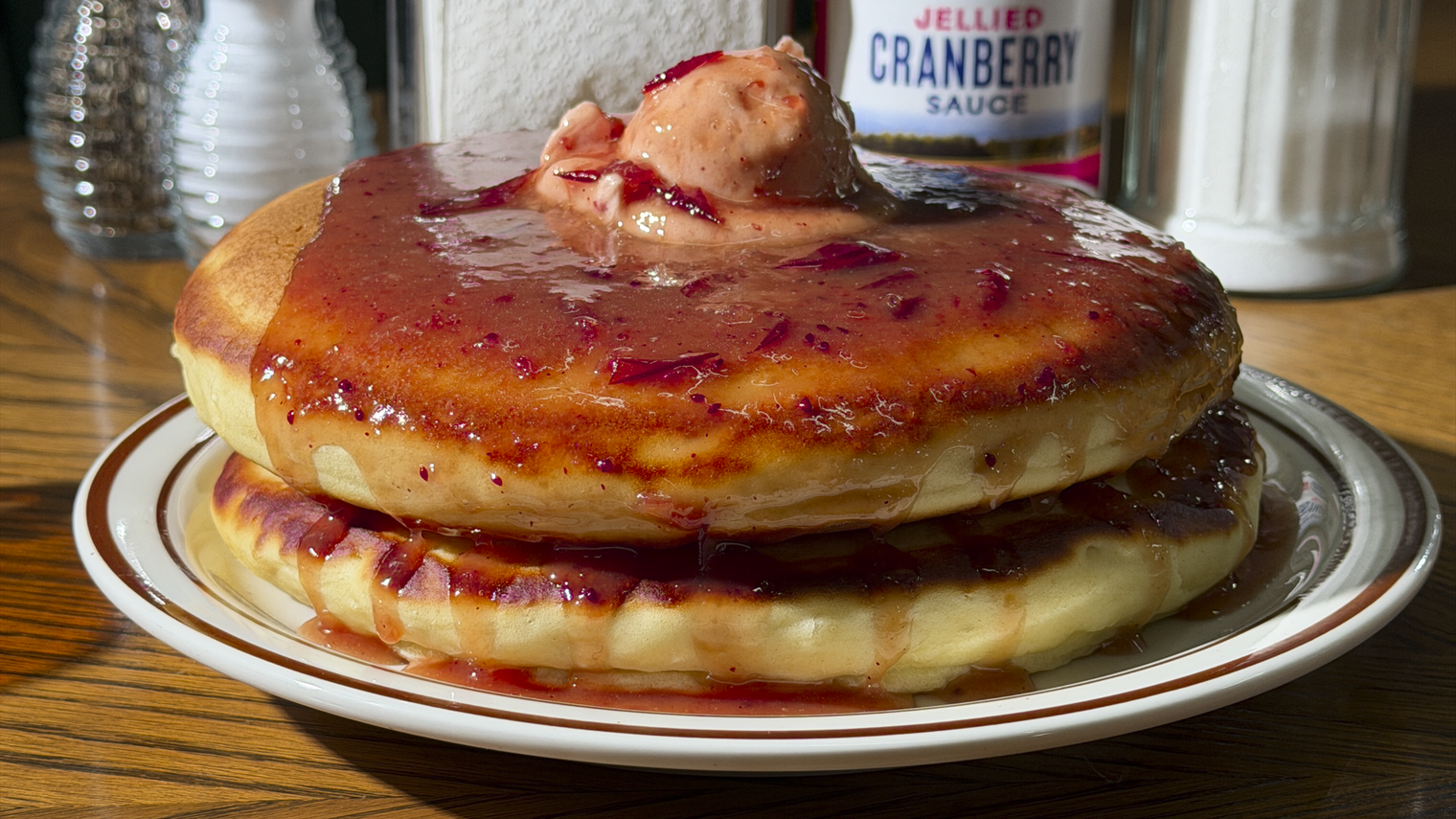
A pancake batter with a head start
These pancakes ask for an hour of advance planning, since the buttermilk batter rests with yeast before it reaches the pan. That wait gives the mixture time to develop, setting up a thicker, more substantial result than a quick batter mixed and cooked immediately. The topping does much of the work at the table: cranberry goes into both a bright pink butter and a warm maple syrup, bringing tart fruit and sweetness to the same plate.
It’s a small recipe with a deliberately generous finish. The stated yield is two large pancakes, so the butter and syrup are part of the experience, not incidental garnishes. This is more significant than it looks: the slow cooking and toppings mean these pancakes are best treated as a planned breakfast, rather than a last-minute fix.
Ingredients
Makes 2 large pancakes
Pancakes
- 1¼ cups buttermilk
- 2 cups all-purpose flour, divided
- 1 packet (2¼ tsp) active dry yeast
- 3 tbsp sugar
- 1 tsp baking soda
- ½ tsp salt, or to taste
- 2 large eggs
- 4 tbsp butter, melted
- A little neutral oil, for the pan
The flour is split between the yeast mixture and the dry ingredients added later. That division matters: the first cup combines with warm buttermilk, yeast and sugar during the rest, while the remaining cup is whisked with baking soda and salt. Keep the melted butter ready for the final mix, but give it a moment to cool if it’s very hot; the aim is to blend it into the eggs without making the mixture unpleasantly warm.
Pink butter
- ¼ of a 14-oz can Ocean Spray Whole Cranberry Sauce (the amount can be approximate)
- 2 sticks (1 cup) unsalted butter, softened
- 1 tsp salt
Softened butter is easier to blend evenly than butter straight from the refrigerator. The cranberry amount can be approximate, so the recipe doesn’t depend on dividing the can with precision. A few small pieces left in the finished butter are fine; they’ll give it a less uniform texture without changing how it’s served.
Cranberry maple syrup
- 2 sticks (1 cup) unsalted butter
- ¾ of a 14-oz can Ocean Spray Whole Cranberry Sauce, using what remains
- ½ cup maple syrup
- ½ tsp salt
- A splash of water, if needed
The syrup uses the rest of the cranberry sauce, which keeps the ingredient list tied to one can. Water is there as an adjustment if the mixture feels too thick to drizzle; add it gradually, since a small splash can loosen the texture. The butter makes this richer than maple syrup served on its own, so a light hand at first gives you room to add more at the table.
Equipment
- Food processor or electric hand mixer
- Small nonstick skillet with a lid
- Small saucepan
- Mixing bowls
- Whisk
- Rubber spatula
- Wire rack and baking sheet
- Paper towels
The covered skillet helps the thick batter cook through before the first side gets too dark. A wire rack set over a baking sheet gives the cooked pancake somewhere to rest in the warm oven while the second one cooks; that airflow helps avoid trapping steam underneath. If you’re working in a small kitchen, set out the bowls, pan and toppings before starting the hour-long rest. Less scrambling once the batter is ready.
Method
Give the yeast time to work. Warm the buttermilk until it feels comfortably hot, like bath water, without being hot enough to burn. Stir in 1 cup of the flour, the yeast and sugar. Cover the bowl with plastic wrap and leave it at room temperature for about an hour. Meanwhile, whisk the remaining flour with the baking soda and salt in a separate bowl.
The temperature cue is intentionally practical: the buttermilk should feel warm, not scalding. The hour-long rest gives the yeast time to act on the mixture, and it also creates a natural pause for preparing the two toppings. Don’t combine the dry bowl with the yeast mixture early; keeping those steps separate follows the recipe’s order and leaves the batter ready for a single final mix.
Blend the pink butter. While the batter rests, process the softened butter, cranberry sauce and salt until smooth. A hand mixer works too; a few small cranberry pieces are fine.
Scrape the bowl as needed so the cranberry and salt are distributed through the butter. A food processor can make a smoother mixture, while a hand mixer may leave some visible fruit. Either texture works here. If you make it ahead during the rest, keep it ready to spoon over the pancakes when they’re hot.
Warm the syrup. Combine the butter, remaining cranberry sauce, maple syrup and salt in a small saucepan over medium-low heat. Whisk until thick and combined. Stir in a splash of water if you’d like a looser consistency.
Use moderate heat and keep whisking as the ingredients come together. The goal is a warm, combined sauce, not a hard boil; the recipe gives no need to reduce it further. If it thickens while waiting, a little water can bring it back toward a pourable consistency.
Mix the batter. Once the yeast mixture has rested, whisk in the eggs and melted butter. Add the wet mixture to the dry ingredients and stir until combined. Small lumps are fine as long as no dry flour remains.
Stir only until the flour is incorporated. Chasing every lump can lead to more mixing than this batter needs, while dry pockets would leave the pancakes uneven. The mixture should be thick enough to pour slowly into the skillet, so use a spatula to gather batter from the sides and bottom of the bowl before cooking.
Cook low and slow. Set the oven to its lowest temperature and place a wire rack over a baking sheet inside to keep the first pancake warm. Heat a small nonstick skillet over low heat, add a little oil, then wipe the pan with a paper towel so only a thin film remains.
The low heat is central to the method. These are large pancakes, and the covered pan gives the center time to cook while the outside browns gradually. A thin coating of oil helps with release without leaving the surface greasy. Here’s the thing: patience at the stove is doing more than the toppings can fix.
Pour in about half the batter and cover the skillet. Cook for roughly 5 minutes, until the edges are set and the top looks opaque rather than wet. Lift an edge gently with a spatula to check that the underside is evenly golden and the top jiggles without running. Flip carefully, then cook uncovered for about 2 minutes, until cooked through and golden underneath.
Use the visual cues alongside the approximate cooking times, since pan heat and the skillet itself can affect how quickly the batter sets. The surface should look opaque before you flip; if it still runs when the pan moves, give it more time over low heat. A wide spatula makes the turn easier, but take care not to press down and flatten the pancake.
Transfer the pancake to the warm oven. Lightly oil and wipe the skillet again, then cook the remaining batter the same way. Serve each pancake with a generous spoonful of pink butter and a drizzle of cranberry maple syrup.
The warm oven is holding space, not a second cooking stage: keep the first pancake there while the next one finishes, then bring both to the table. That said, the toppings are rich, so start with a spoonful and a drizzle; diners can add more to taste. And this is the part most people overlook: the cranberry appears in two forms, making the finish both fruity and buttery.
A slow, substantial breakfast. The hour of resting is the trade-off, and the paired toppings are the point.
What the method means for the result
This recipe builds flavor and texture through process rather than a long ingredient list. Yeast gets time in the buttermilk mixture, while baking soda joins the remaining flour and enters only at the final mix. The method then asks for a low, covered cook, which suits the size of the pancakes and gives the center time to set. The result depends on following the sequence and watching the pan, not on complicated technique.
If you’re making these for other people, the timing is easy to misjudge: the batter’s rest is passive, but cooking still happens one pancake at a time. Preparing the butter and syrup during that rest makes the final stretch simpler. A little planning, and a careful flip.
Discussion
Sign in to join the discussion.