Atomic Coffee Roasters and Overpotential are transforming cold brew with electrochemical treatments, enhancing flavor and expanding coffee options.
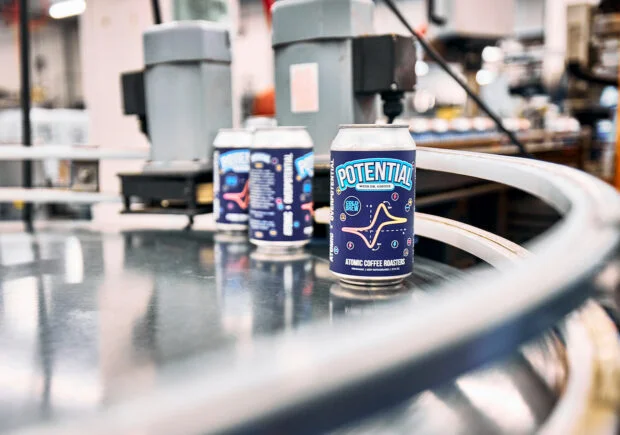
Atomic Coffee Roasters, based in Massachusetts, is set to revolutionize the cold brew market with its new product, Potential, which utilizes electrochemical treatments to enhance flavor profiles. This method is a collaboration with Overpotential, a startup focused on applying electrochemistry to improve consumable liquids.
Revolutionizing Cold Brew with Electrochemistry
The production begins with Atomic's standard cold brew method before the coffee flows through an innovative process developed by Overpotential. This process uses low-voltage electric currents to modify the flavor compounds within the coffee, opening new possibilities for taste. Spencer Mahoney, President of Atomic Coffee Roasters, emphasized that while cold brew has its appeal, there's often a limit to the flavors that can be extracted from certain coffees. This limitation has frustrated many coffee enthusiasts who yearn for more than just a smooth, chilled caffeine fix.
What makes Potential unique is its scientific approach. Instead of relying purely on brewing time and temperature, which traditionally dictate flavor extraction, this method seeks to engage the chemical properties of coffee in ways that have not been fully explored before. By applying electrochemical techniques, Atomic Coffee Roasters is not just changing how cold brew is produced; they're setting a new standard for flavor enhancement in coffee at large.
The Electrochemical Process: A New Frontier
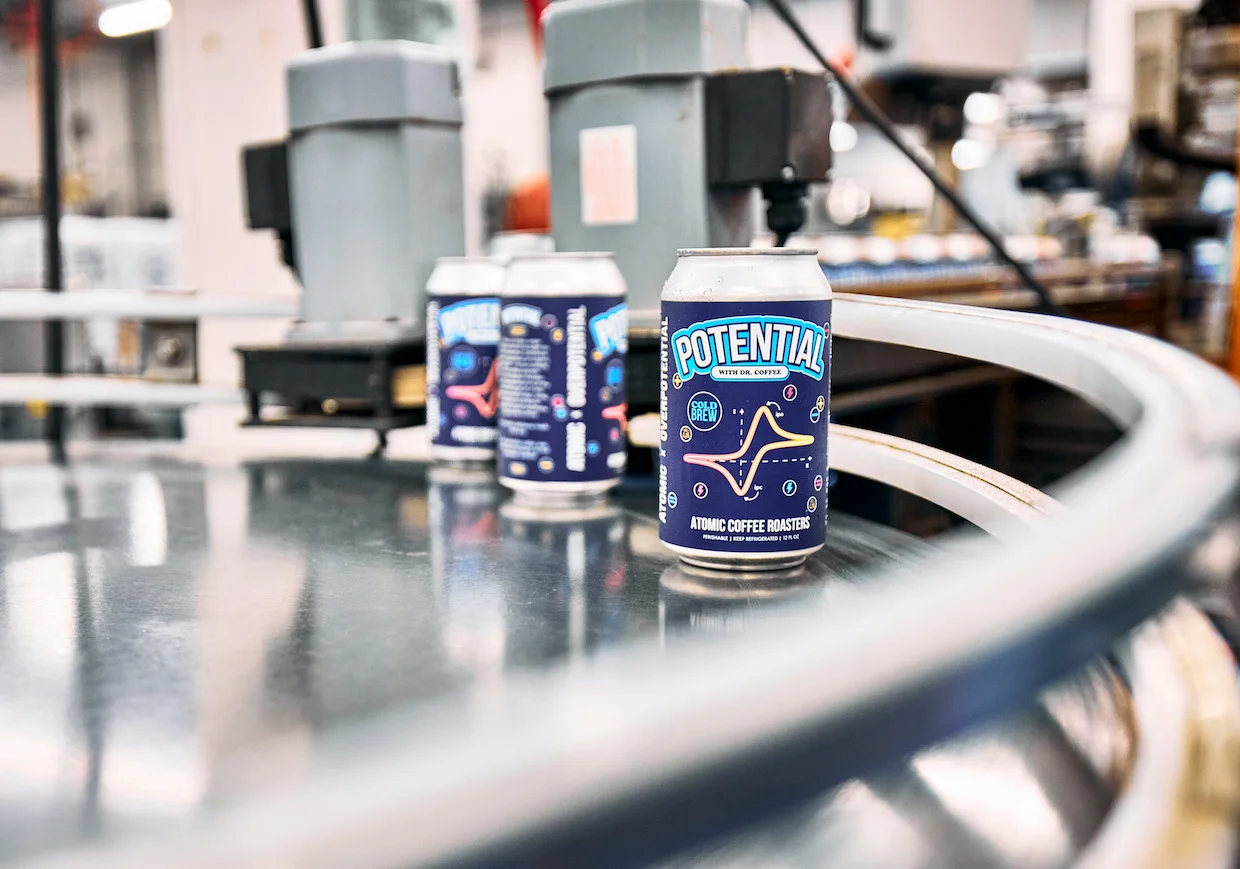
The latest Potential cold brew cans produced at Atomic Coffee Roasters’ facility in Danvers, Massachusetts. Photo by Ricky Ortiz / Ohrteez Media. Courtesy of Atomic Coffee Roasters.
Overpotential was founded in Cambridge in 2025 by Christopher Hendon, an associate professor of chemistry at the University of Oregon, and his colleague Doran Pennington. Their focus has been on coffee-related electrochemistry research, aimed at altering flavors without adding extraneous ingredients. With this collaboration, Potential marks their first foray into commercial coffee products. This partnership marries scientific rigor with the artisanal craft of coffee brewing, indicating that the future might not just rely on traditional methods.
At Atomic's production facility in Danvers, electrodes installed in specialized piping utilize low-voltage electrical currents to treat the cold brew before canning. Adjustments to voltage and flow rate are made based on real-time sensory evaluations to achieve optimal flavor. The real-time adjustment mechanism ensures that each batch can be fine-tuned, allowing for a level of customization that’s typically absent in mass-produced beverages.
“We select food-safe electrode materials and target organic molecules that may have oxidized during brewing,” Hendon stated, explaining the meticulous nature of the process. With a focus on food safety, this careful selection underscores the commitment to quality and health in coffee production. The treatment typically operates at voltages equivalent to those found in household batteries, relying more on the number of passes than increased voltage for deeper flavor enhancements. This approach challenges conventional wisdom, proving that lower power doesn't necessarily mean lower quality.
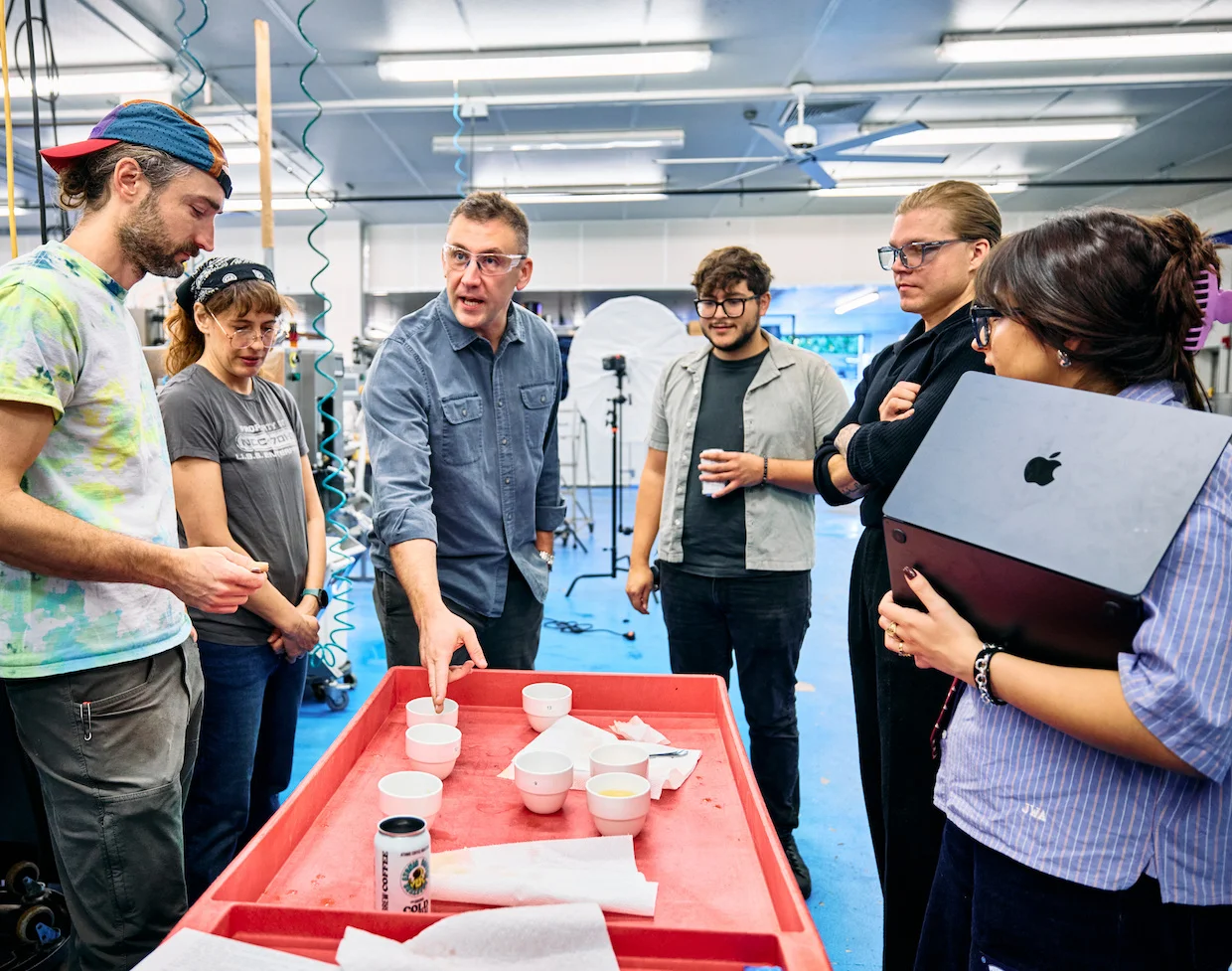
Photo by Ricky Ortiz / Ohrteez Media. Courtesy of Atomic Coffee Roasters.
Flavor Profile and Quality
The first installment of the Potential cold brew features a natural-process coffee sourced from the Gera Estate in Ethiopia. Mahoney described this selection as boasting the berry flavors typical of Ethiopian naturals, along with hints of mango and floral notes that often get muted in traditional cold brew methods. By choosing high-quality, single-origin coffee like this, Atomic isn’t just enhancing the brew; they're aiming to showcase the unique attributes that often get lost.
Hendon noted that using high-quality, single-origin coffees for cold brew can be challenging, as their unique flavor profiles usually become overshadowed by the brewing process. “We are thrilled they selected such an elegant example,” he remarked about the Gera Estate coffee. The selection is telling — it reflects a shift in the coffee industry that emphasizes craftsmanship and complexity over sheer mass production.
The Market Impact and Pricing
A 12-pack of Potential will retail at $48, with pre-orders available starting September 23, and a public launch scheduled for October 5. Pricing strategy will be a key factor in the product's market reception. On one hand, $4 per can isn't outlandishly high for premium coffee offerings; on the other hand, it places Potential in direct competition with established brands that have loyal followings.
If you're working in this space, be prepared for the market's mixed responses. Premium coffee segments have seen explosive growth, but they can also be fickle. Consumers are increasingly educated about what they drink and willing to pay for unique experiences — an advantage for Atomic. However, the significant price point could also alienate budget-conscious consumers.
Future Outlook and Industry Significance
This move could signify a larger trend in the coffee industry. As technology and science converge with traditional brewing methods, expect more brands to explore similarly transformative processes. Beyond cold brew, similar systems typically apply to espresso and other brewing styles, which may prompt a reevaluation of flavor extraction methods across the board.
This collaboration between Atomic Coffee Roasters and Overpotential could ignite interest in advanced caffeinated beverages. If Potential resonates with consumers, it might confirm that innovation tied to flavor enhancement will be a defining characteristic in modern coffee production. And yet, as this segment of the market expands, brands will need to ensure the integrity of their methods matches the novelty of their offers.
Comments? Questions? News to share? Contact DCN’s editors here. For the latest coffee industry updates, subscribe to the DCN newsletter.
Discussion
Sign in to join the discussion.